
Empowering Health Care Professionals to Identify and Support Victims and Survivors of Gender-Based Violence
CARE POWER

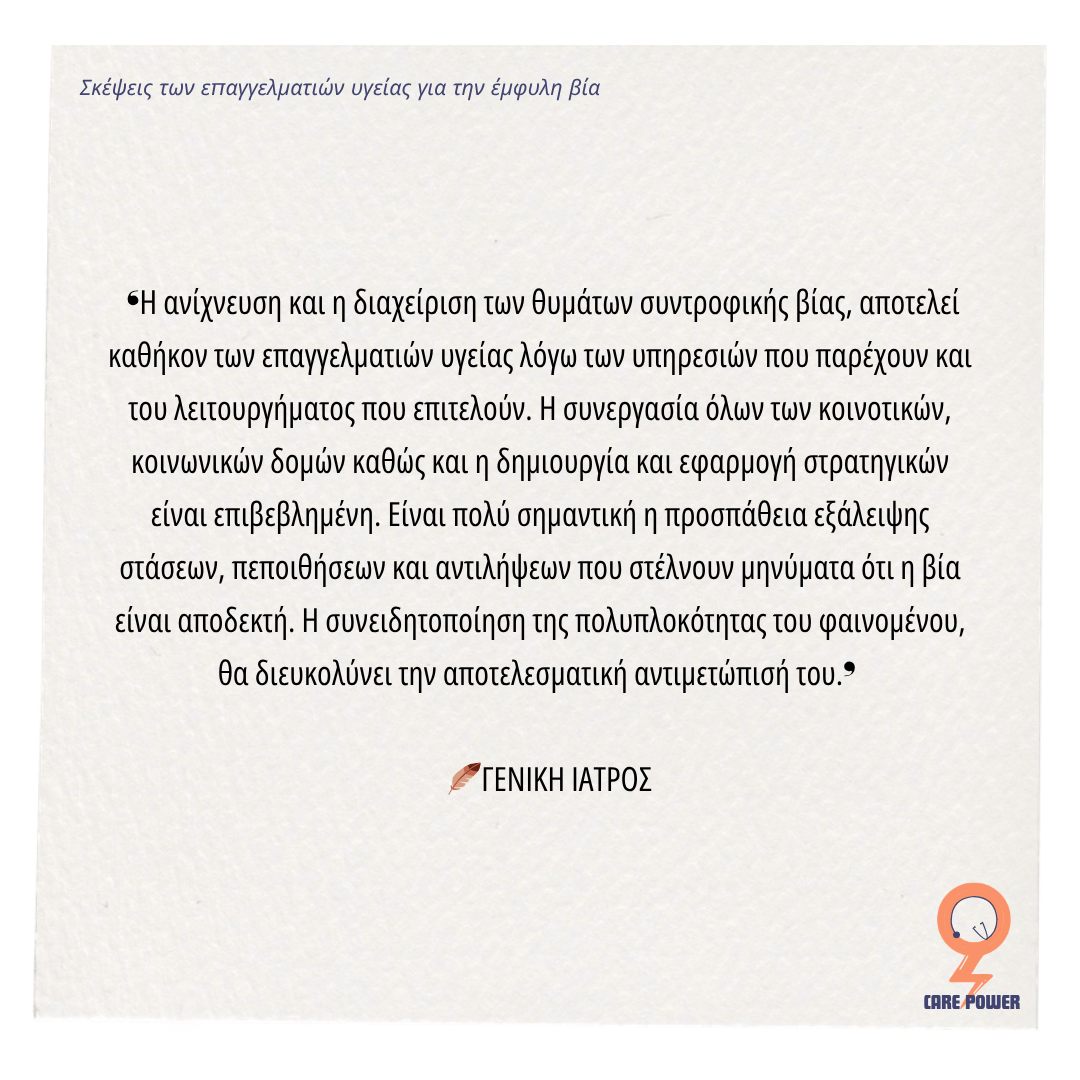
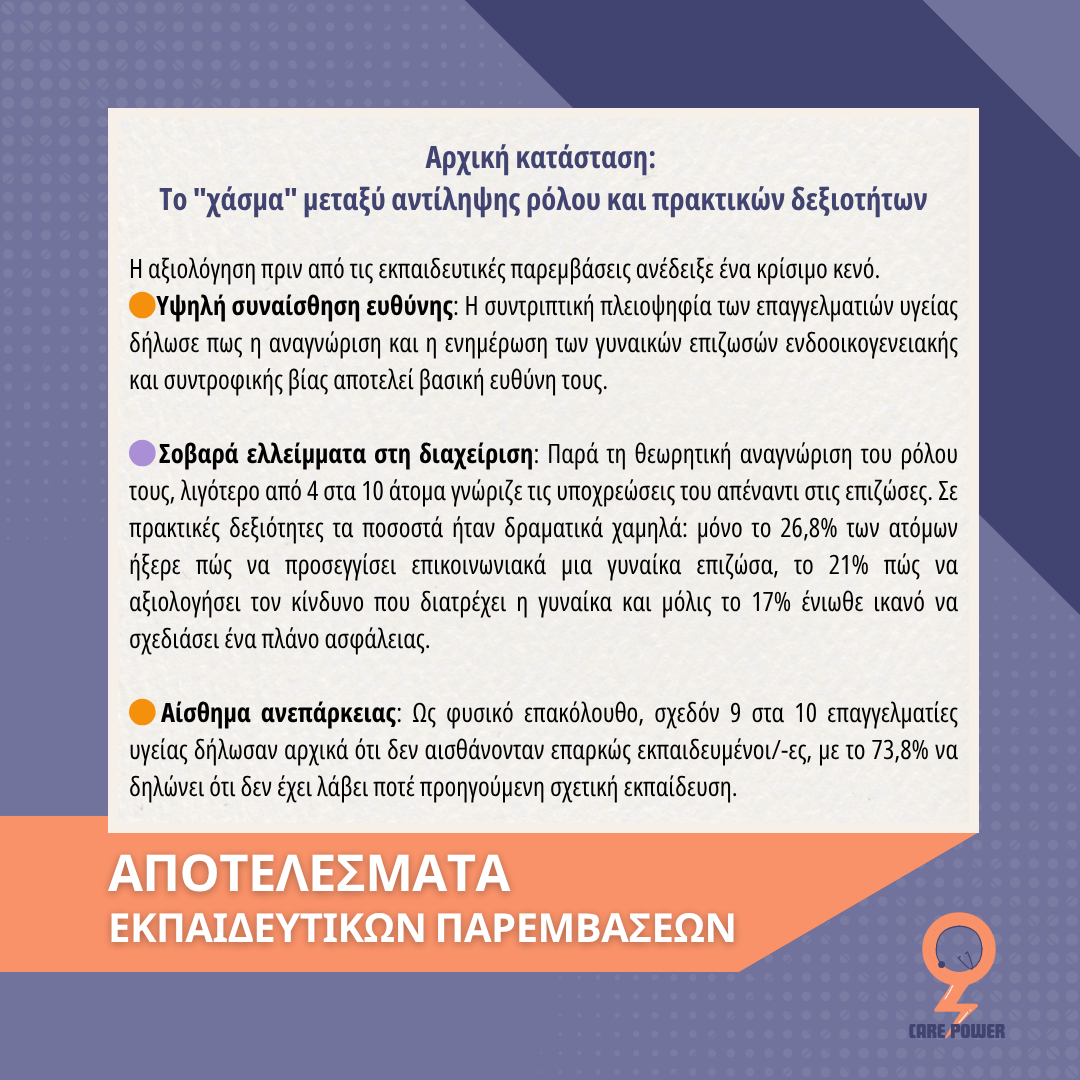
Healthcare professionals are often the first — and sometimes the only — point of contact for women and individuals who have experienced gender-based violence. Despite the importance of their role, the majority of healthcare professionals have not received adequate training to identify and manage such incidents.
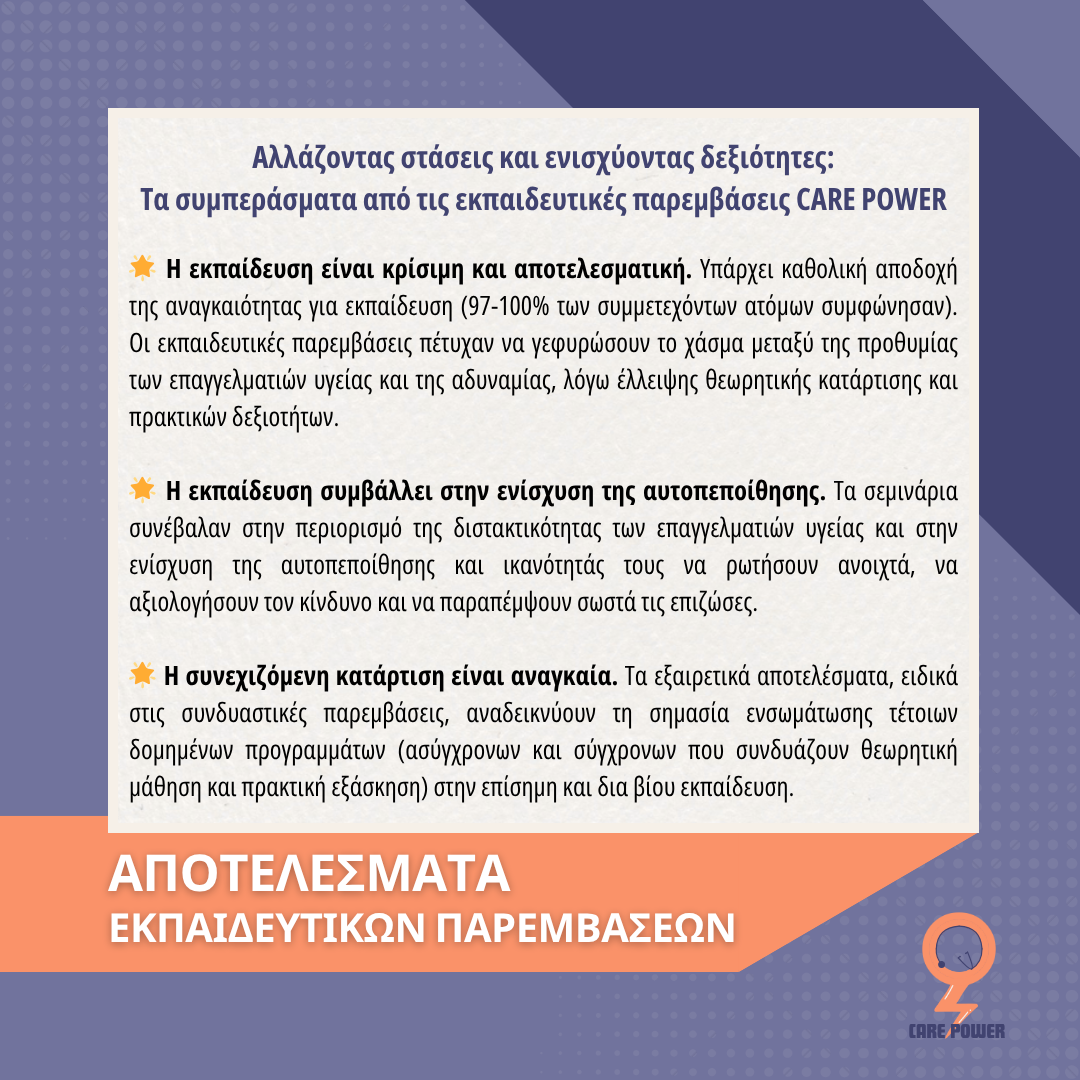
The "CARE POWER" project aims to fill this gap by designing and implementing specialized actions that enhance healthcare professionals' knowledge, skills, and confidence in supporting survivors of gender-based violence. The approach is based on an analysis of the real educational needs of healthcare professionals and utilizes interactive and experiential learning methods.
The "CARE POWER" project aims to fill this gap by designing and implementing specialized actions that enhance healthcare professionals' knowledge, skills, and confidence in supporting survivors of gender-based violence. The approach is based on an analysis of the real educational needs of healthcare professionals and utilizes interactive and experiential learning methods.
Project Objectives
- Investigate and document the knowledge, skills, and training needs of healthcare professionals working in primary healthcare, hospital emergency departments, and final-year medical students.
- Develop interactive and multimedia educational material based on evidence-based best practices, tailored to the needs of different groups of healthcare professionals.
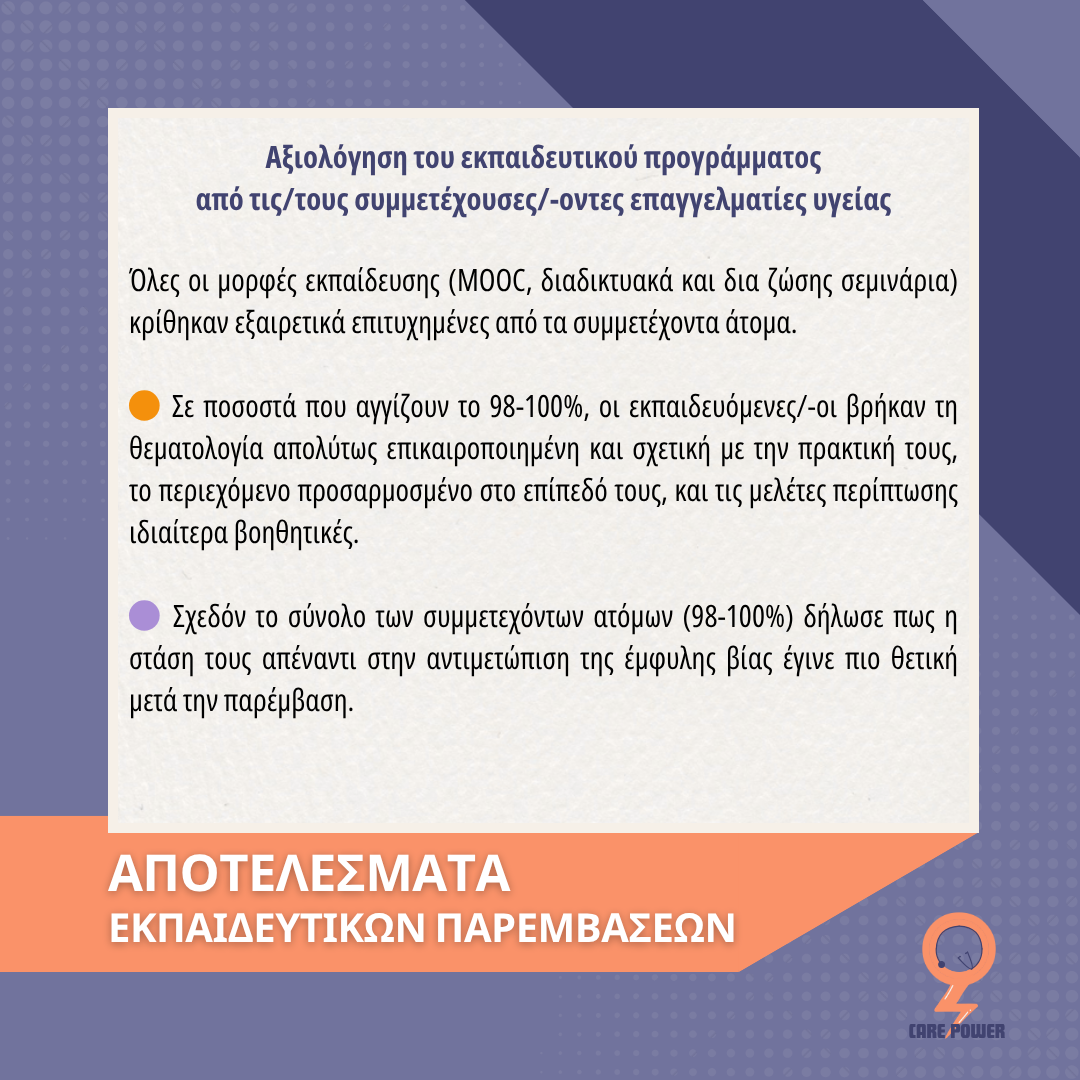
- Implement synchronous and asynchronous educational interventions, both online and in person.
- Highlight good practices and produce tools that can be more broadly utilized in the future.
- Raise awareness and strengthen collaboration among stakeholders within and outside the healthcare system who are involved in the identification and response to gender-based violence.
Implemented Actions
- Literature review of existing knowledge and practices regarding the training of healthcare professionals on gender-based violence issues, aiming to utilize and adapt them to the project’s framework.
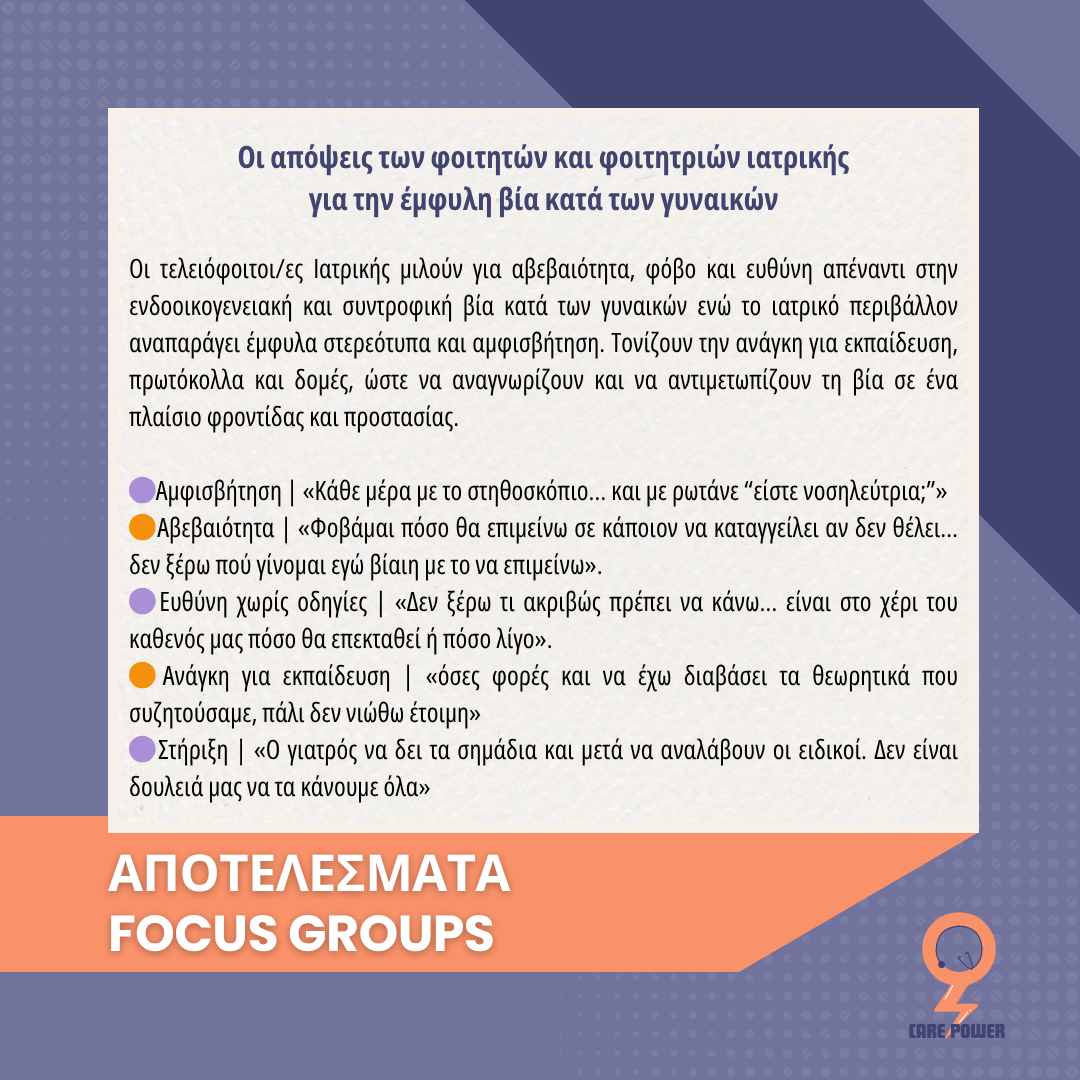
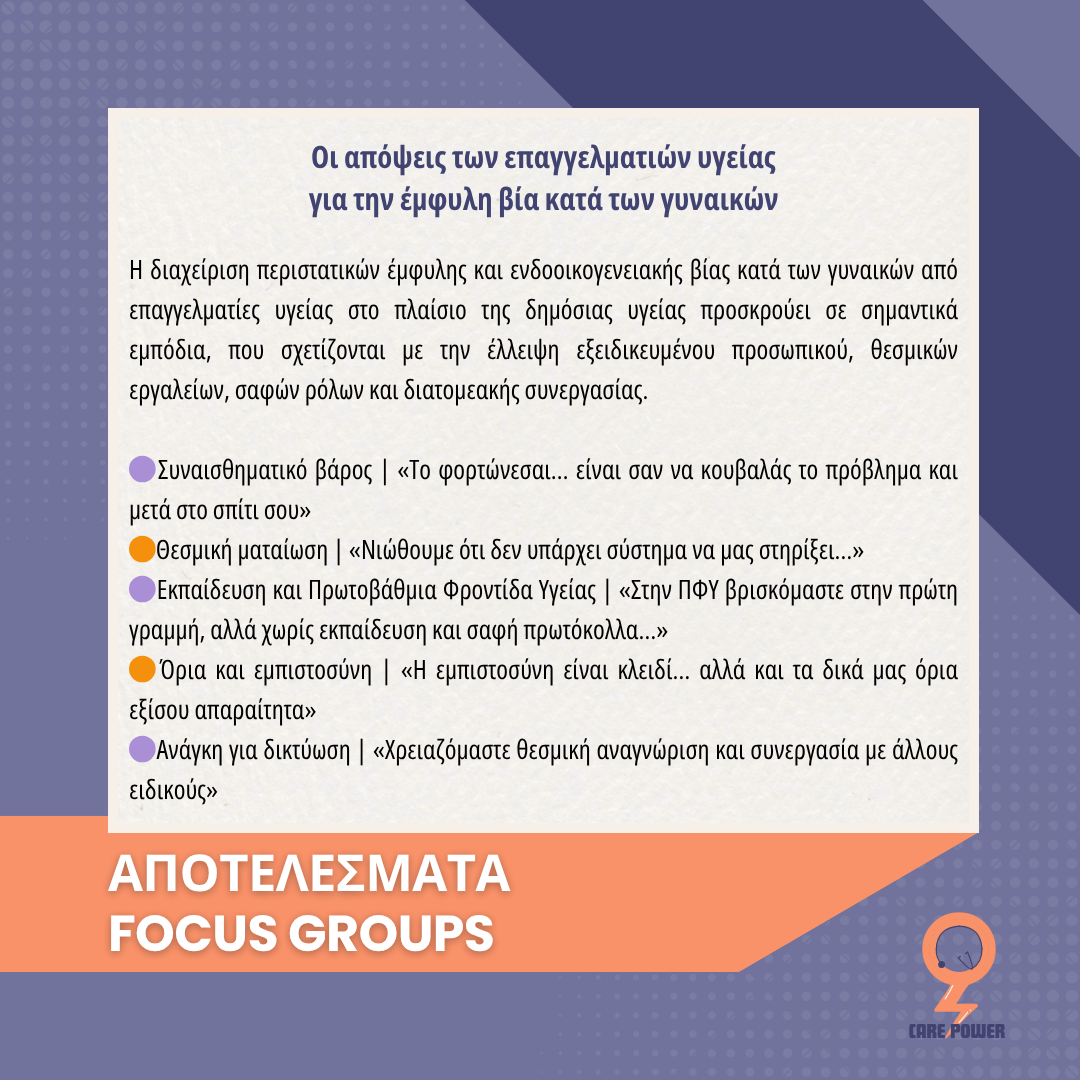
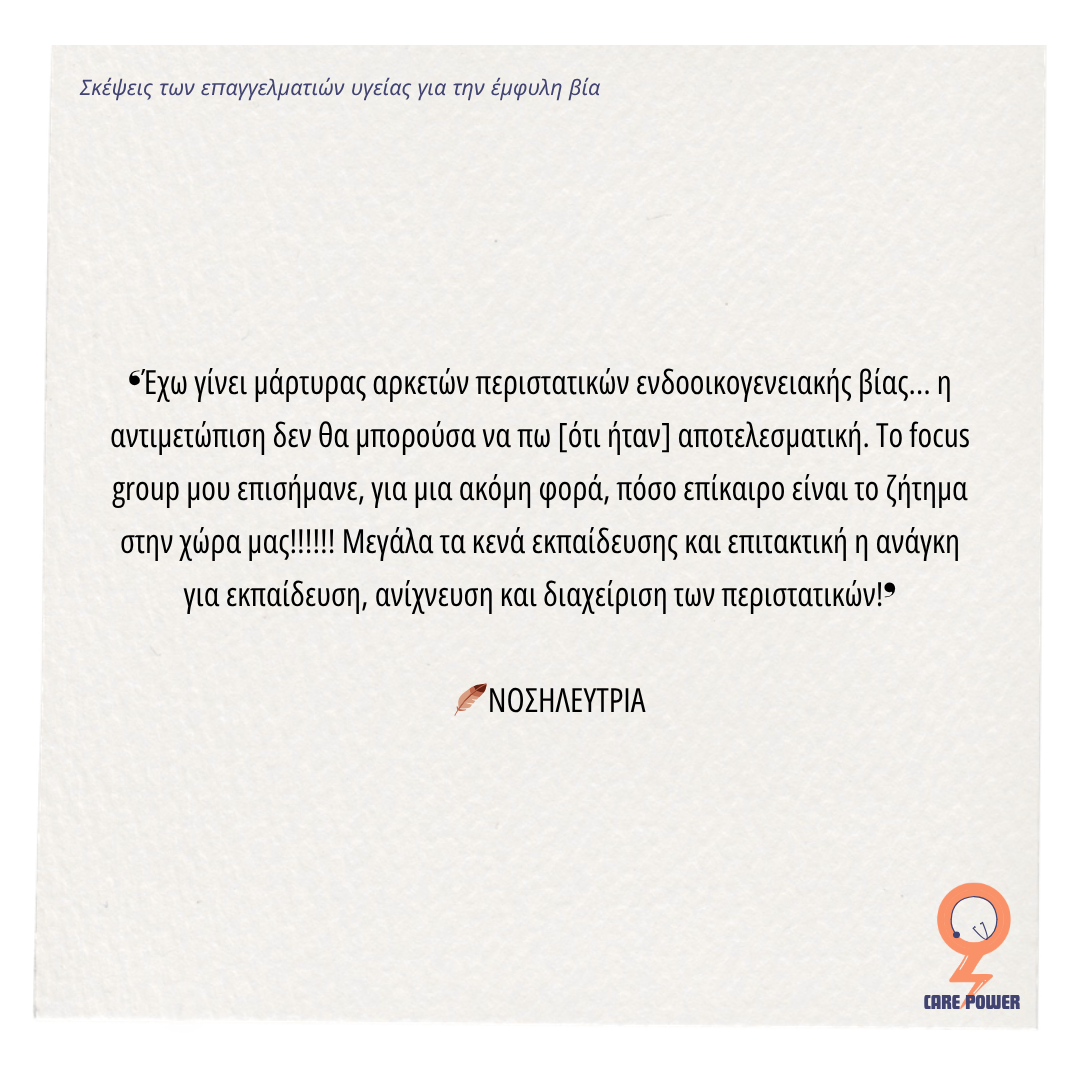
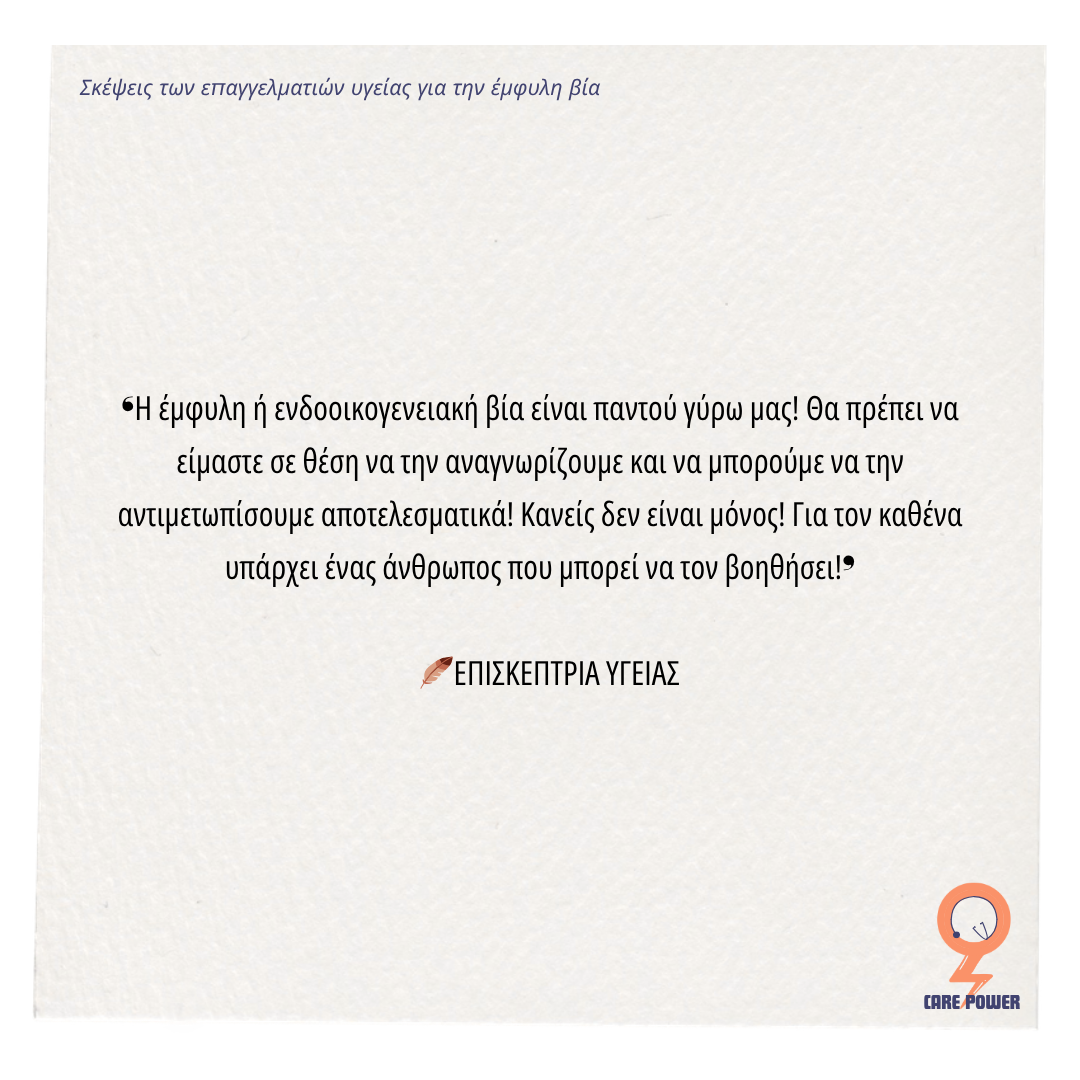
- Conducting qualitative research through focus groups to assess training needs in Thessaloniki and Larissa.
- Development of a Massive Open Online Course (MOOC) for asynchronous learning.
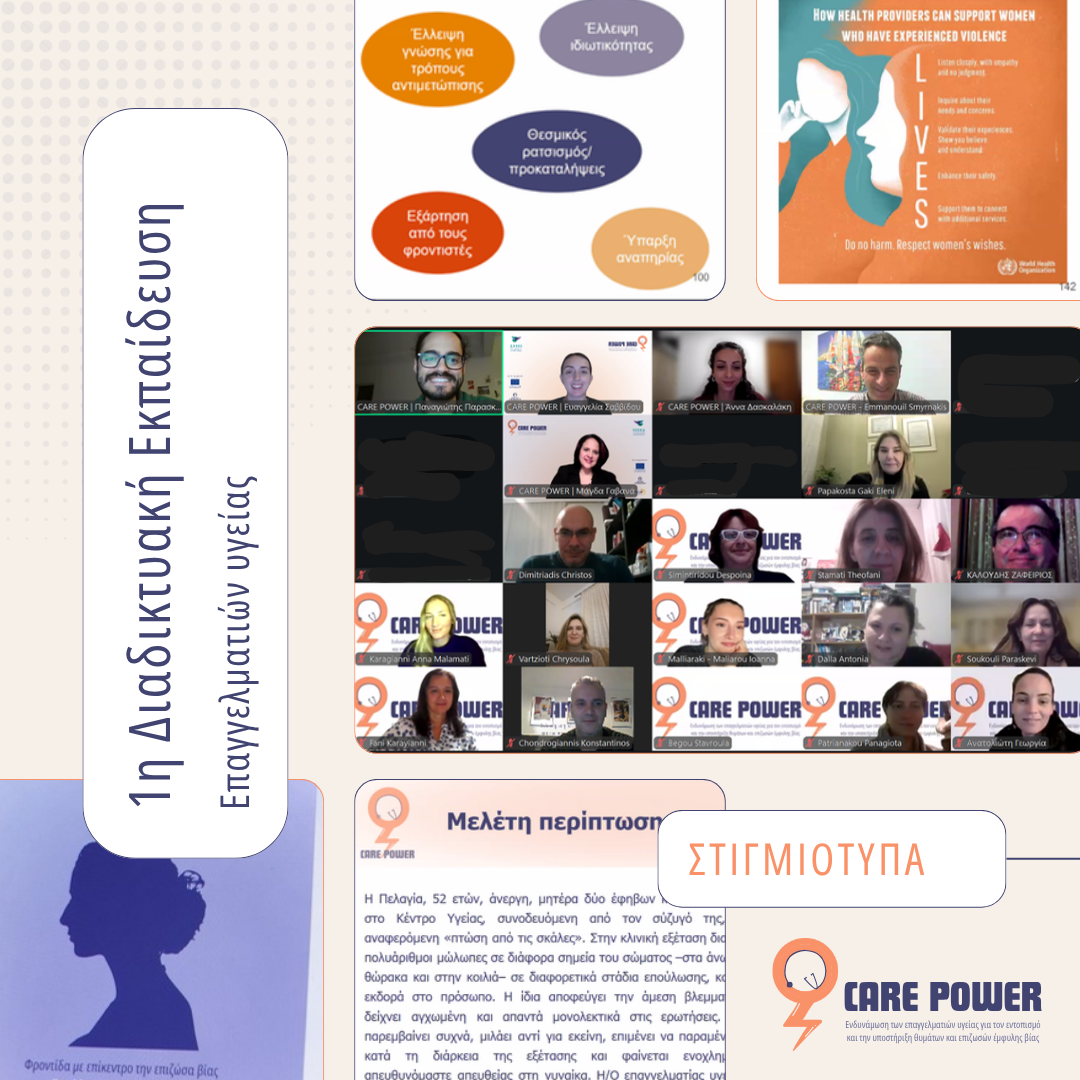
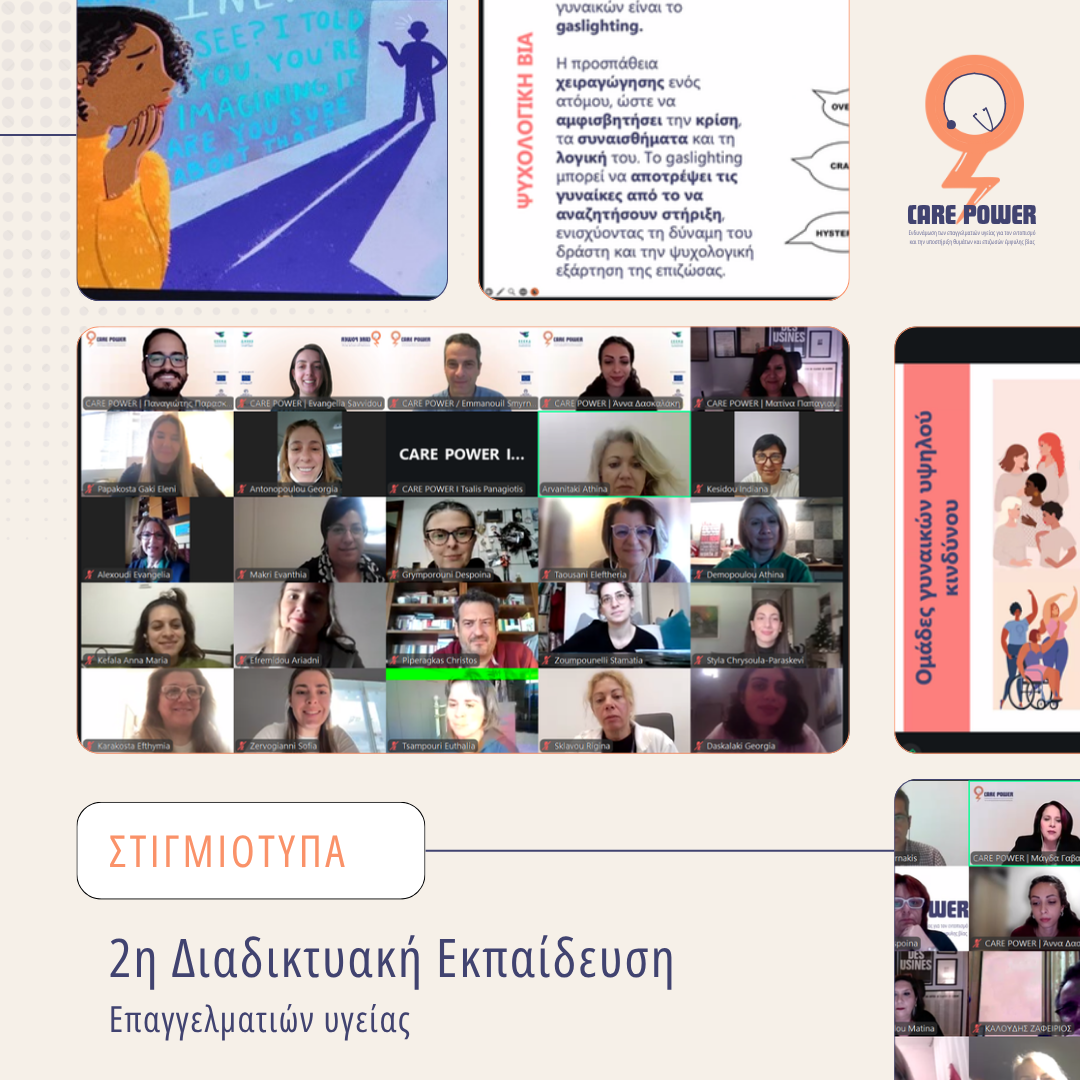
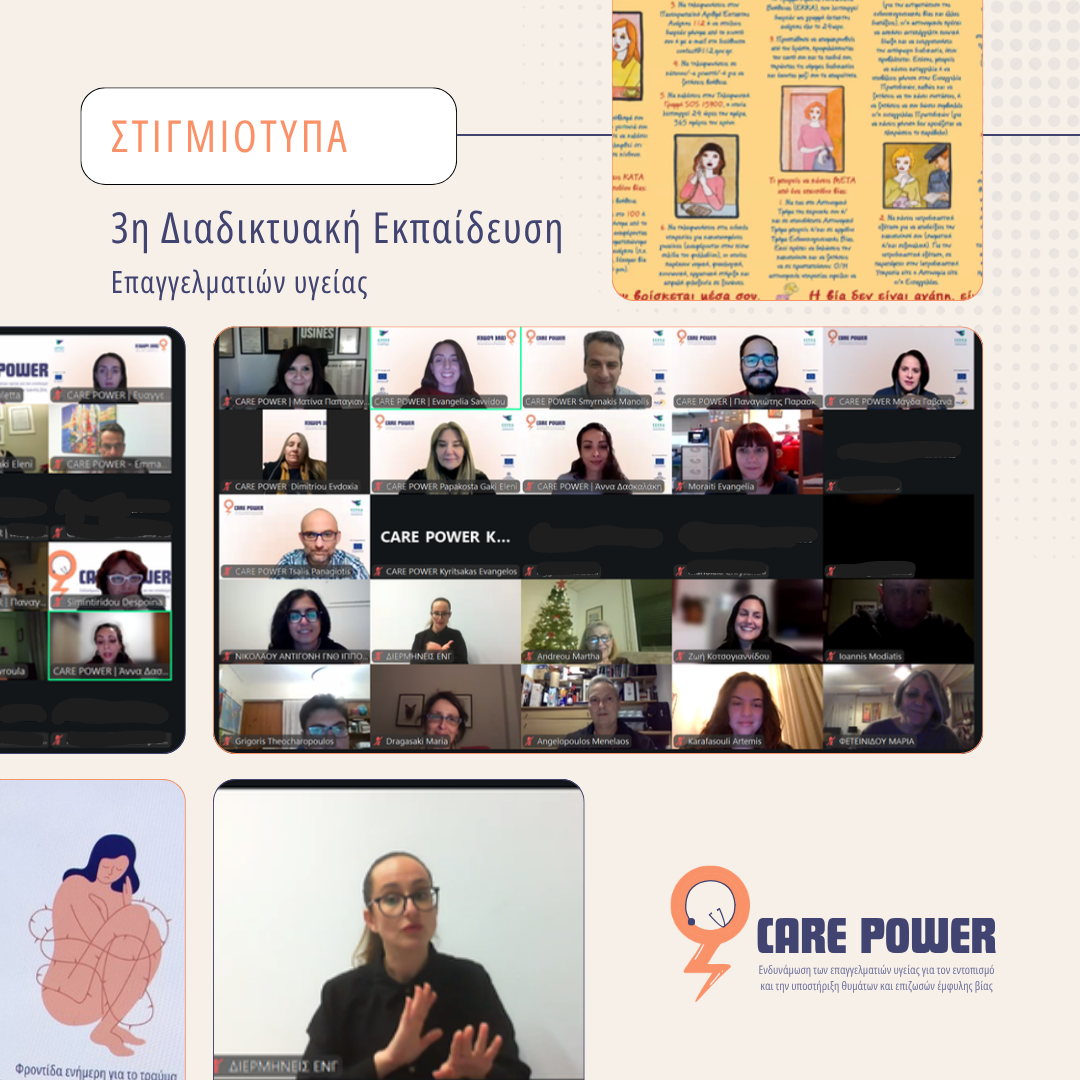
- Online training sessions conducted across Greece.
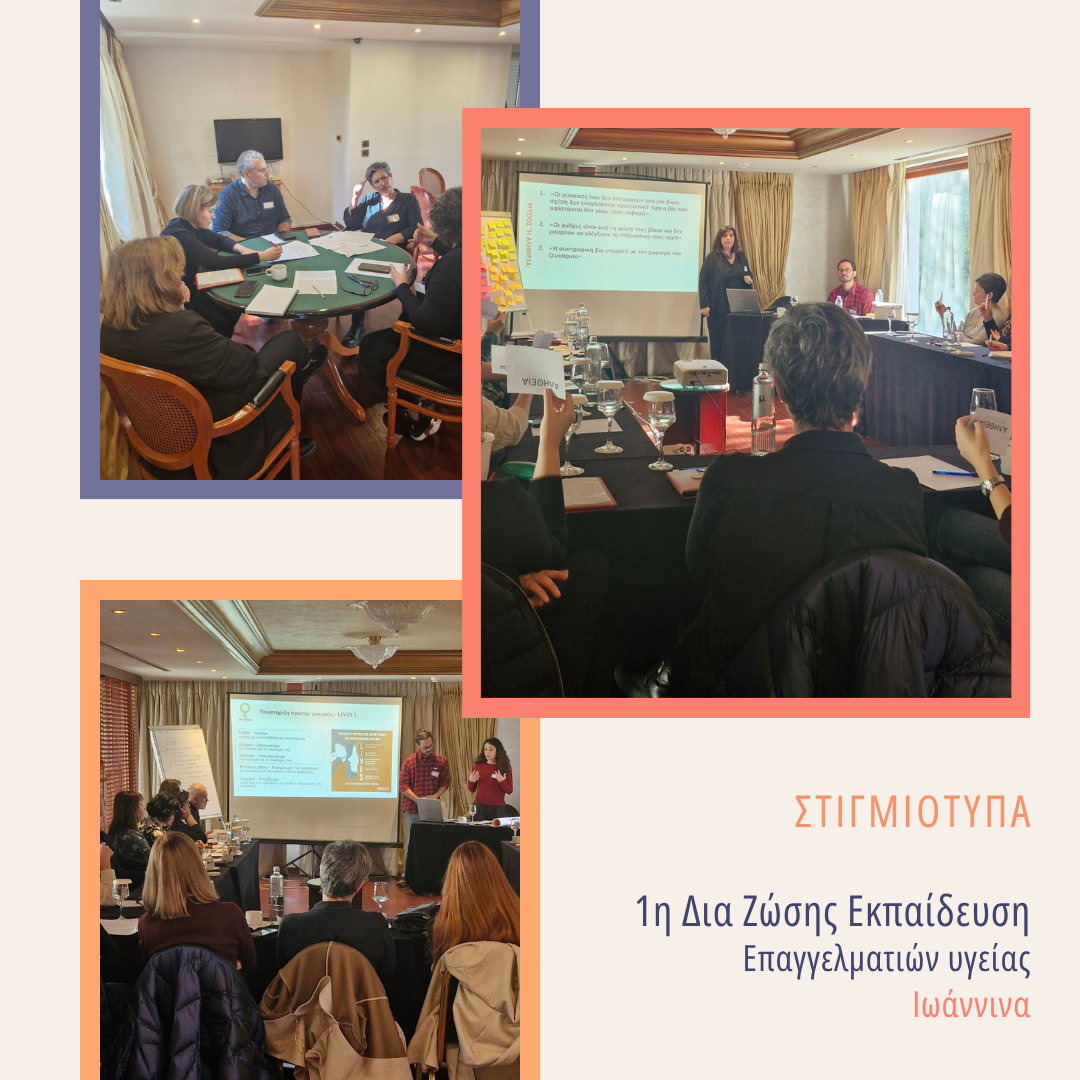
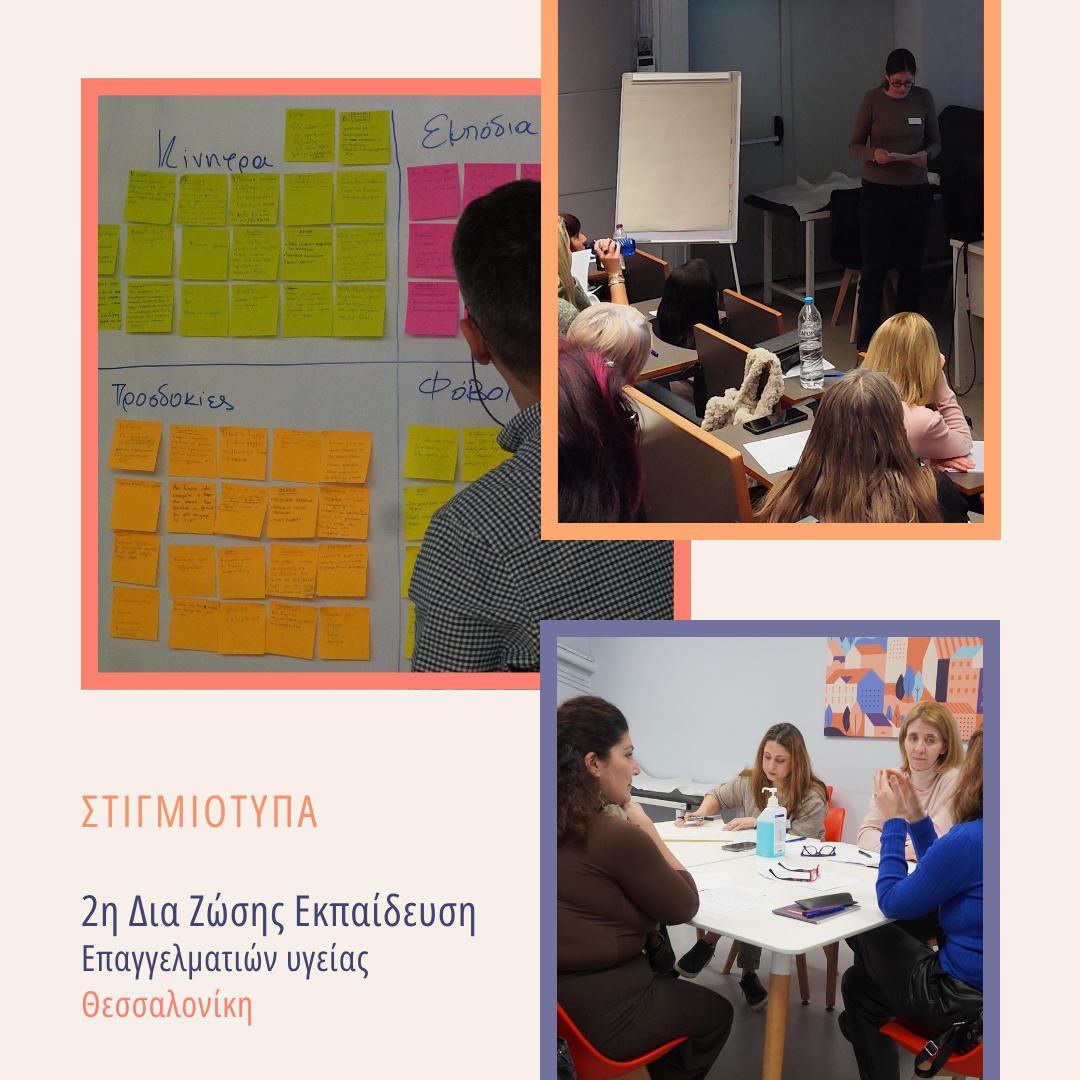
- In-person training sessions held in Thessaloniki, Larissa, and Ioannina.
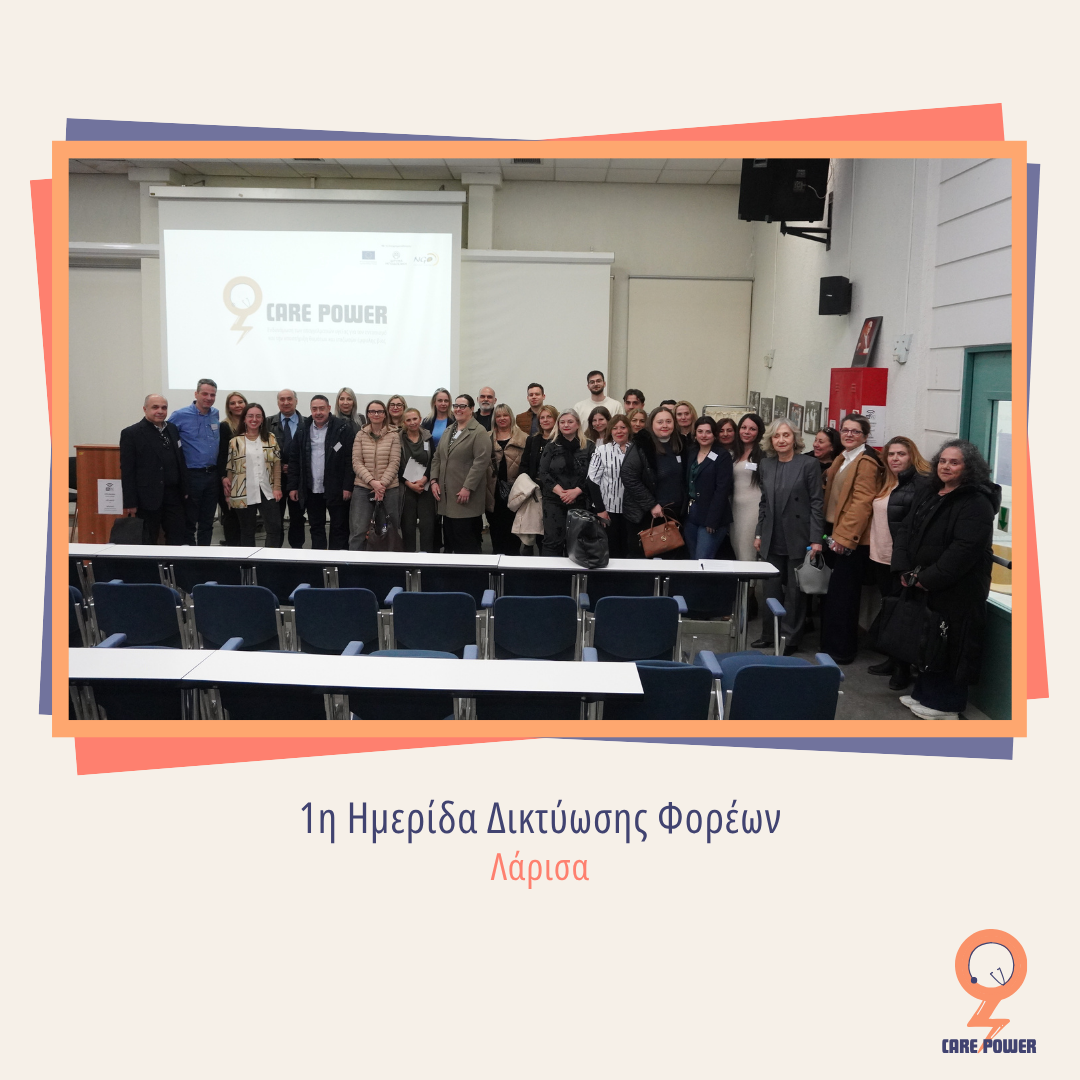
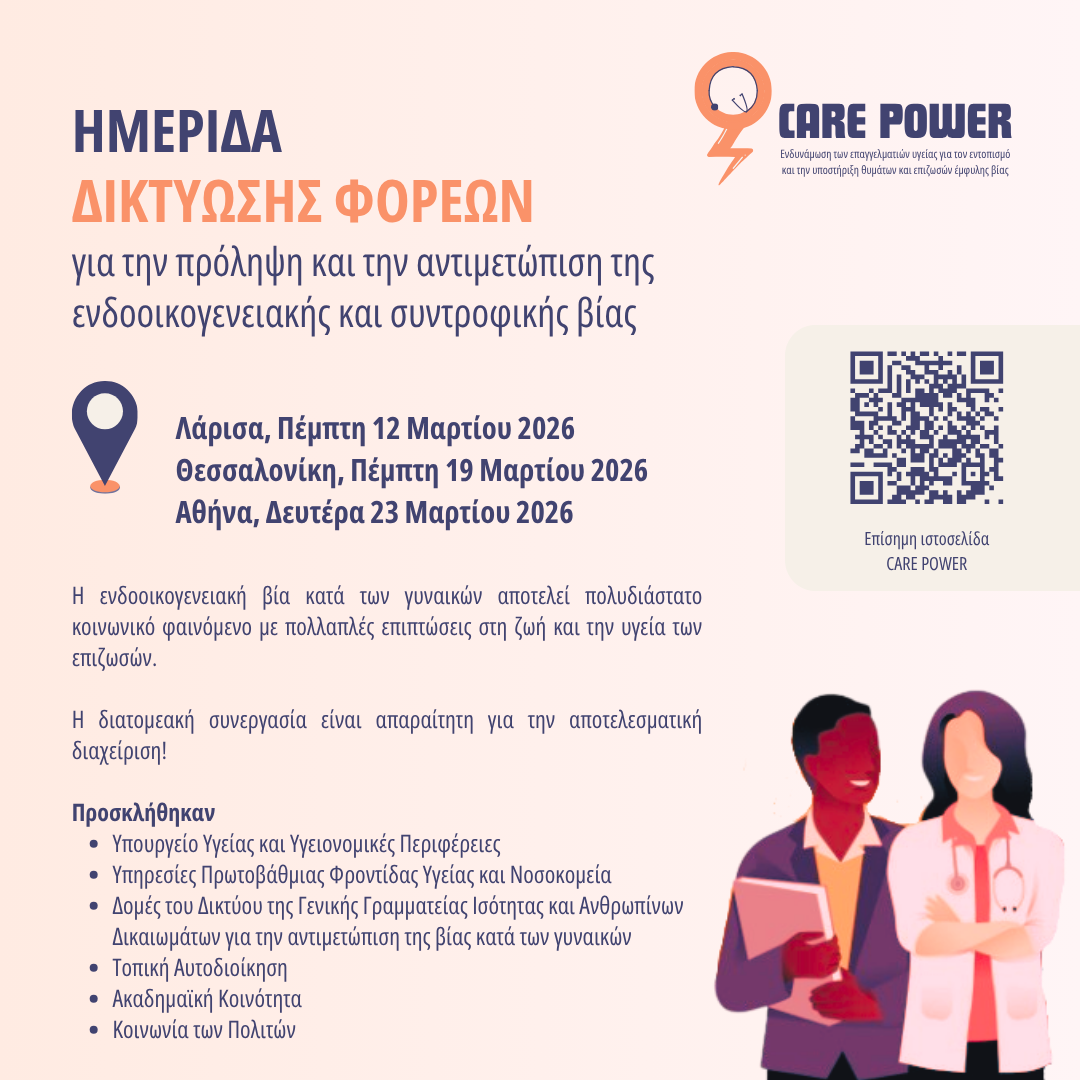
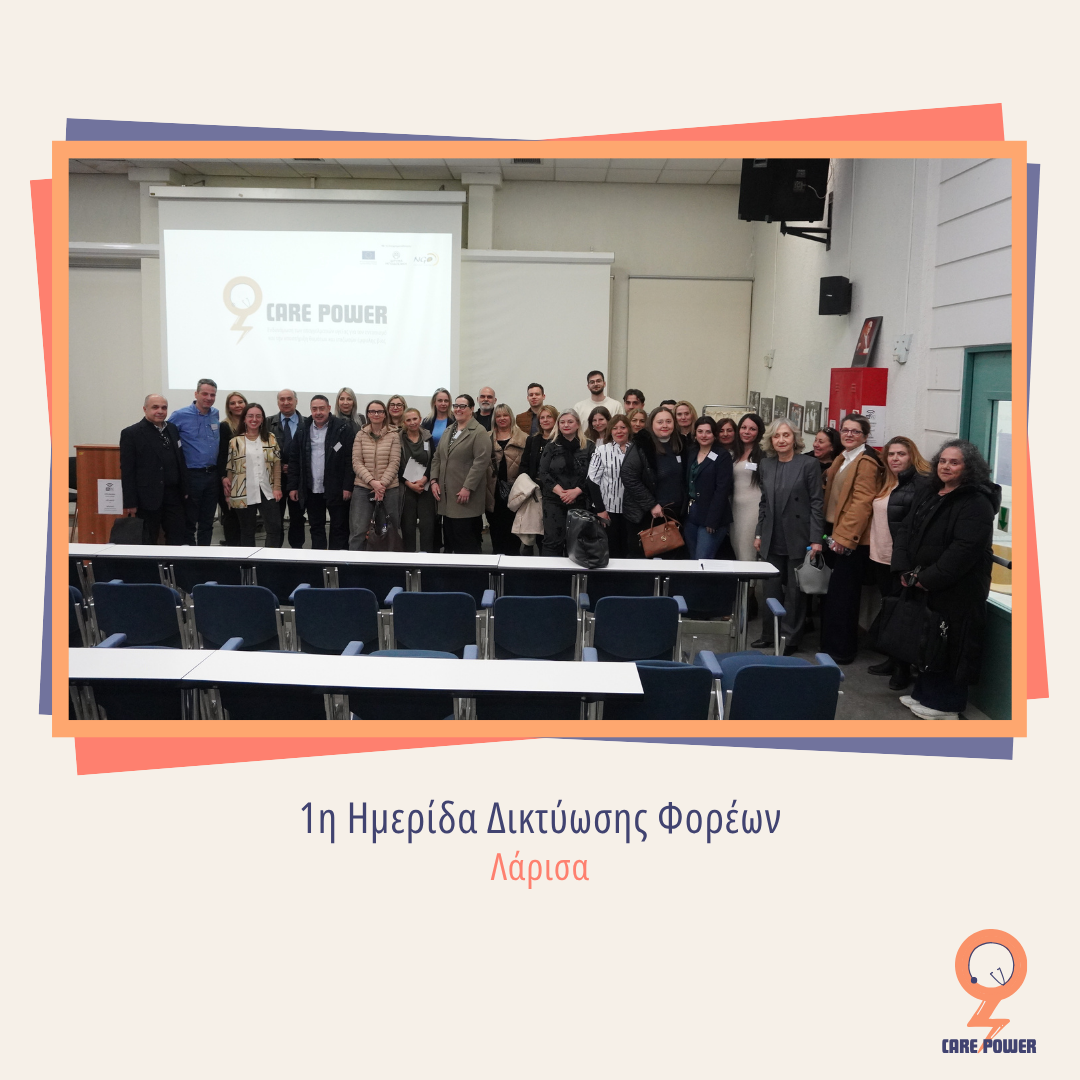
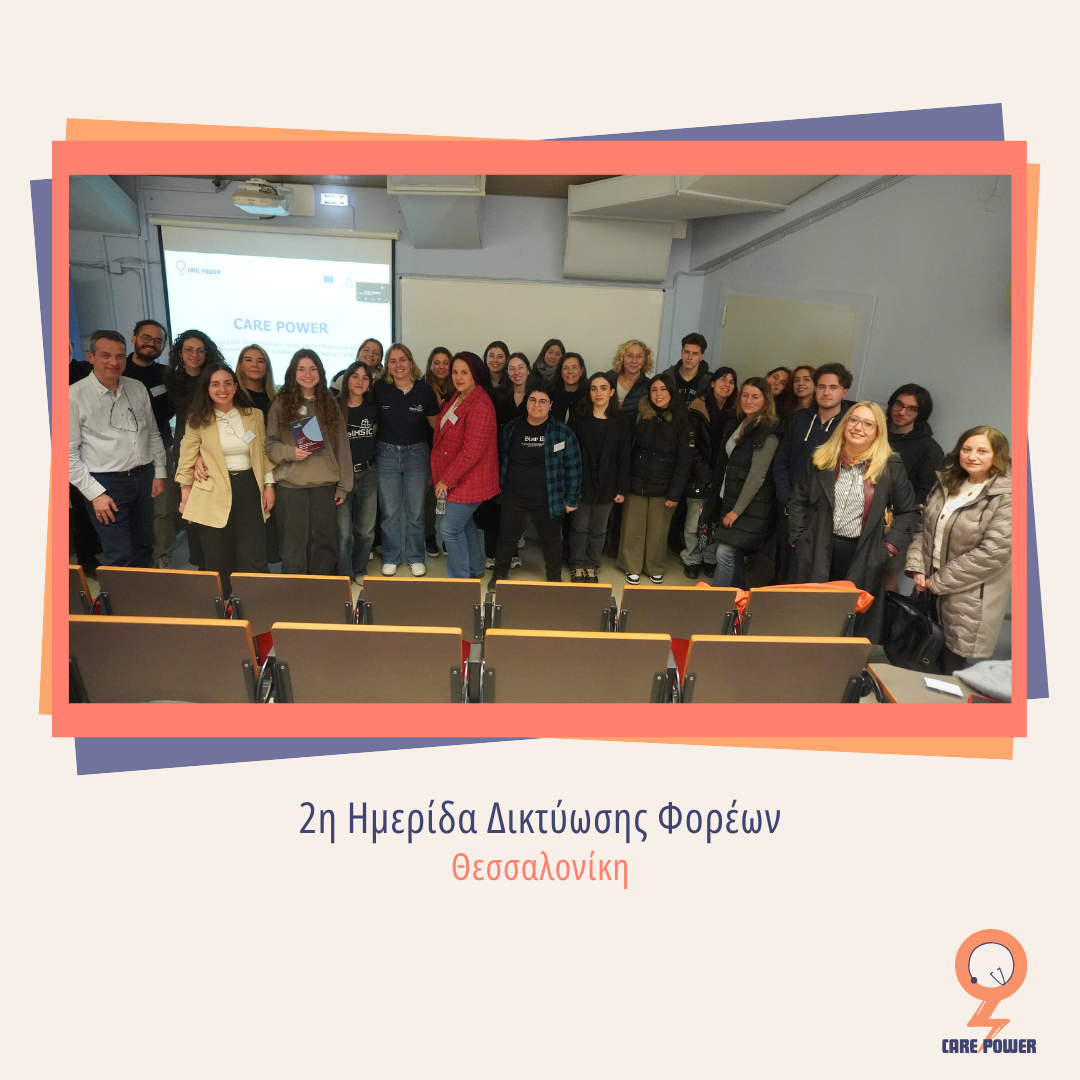
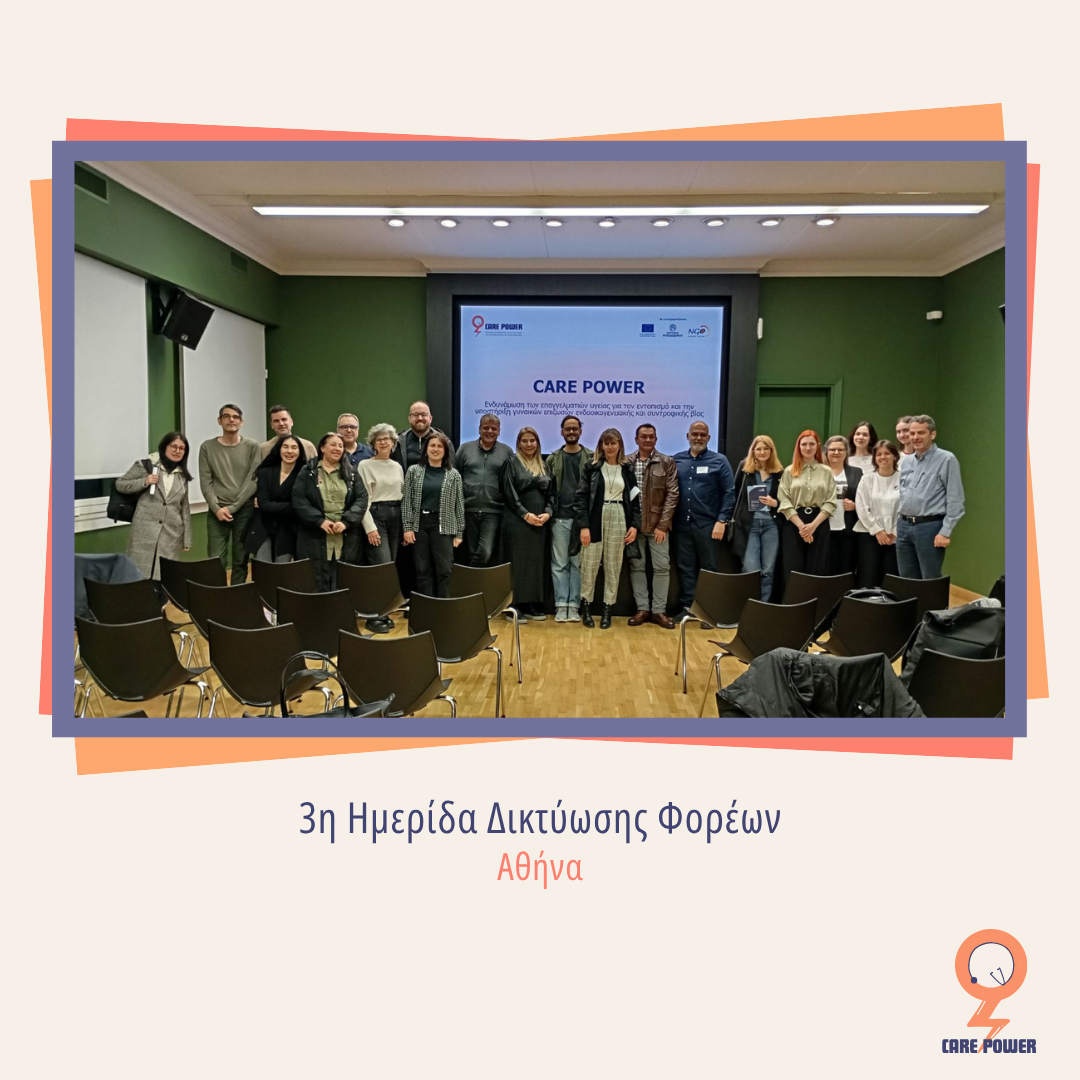
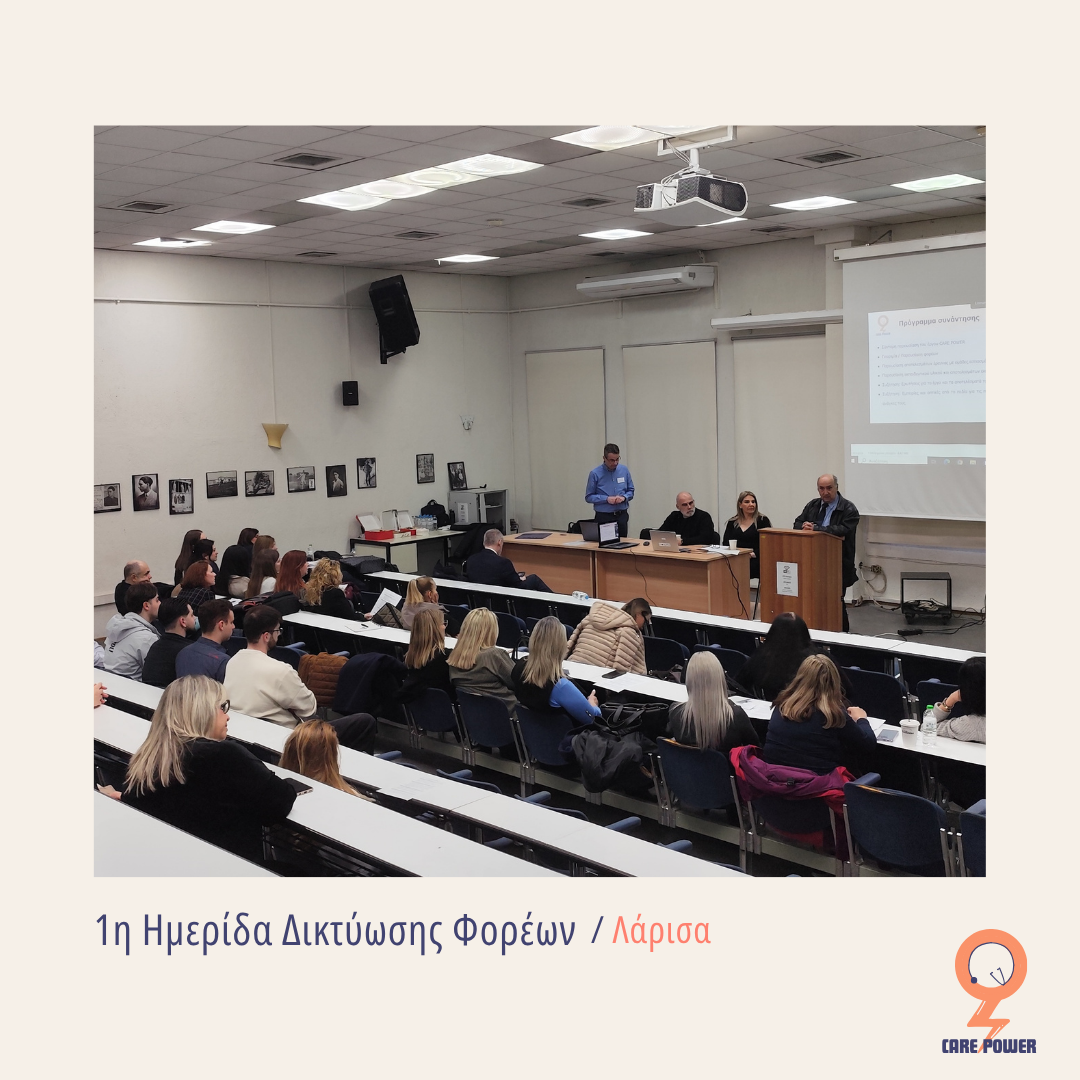
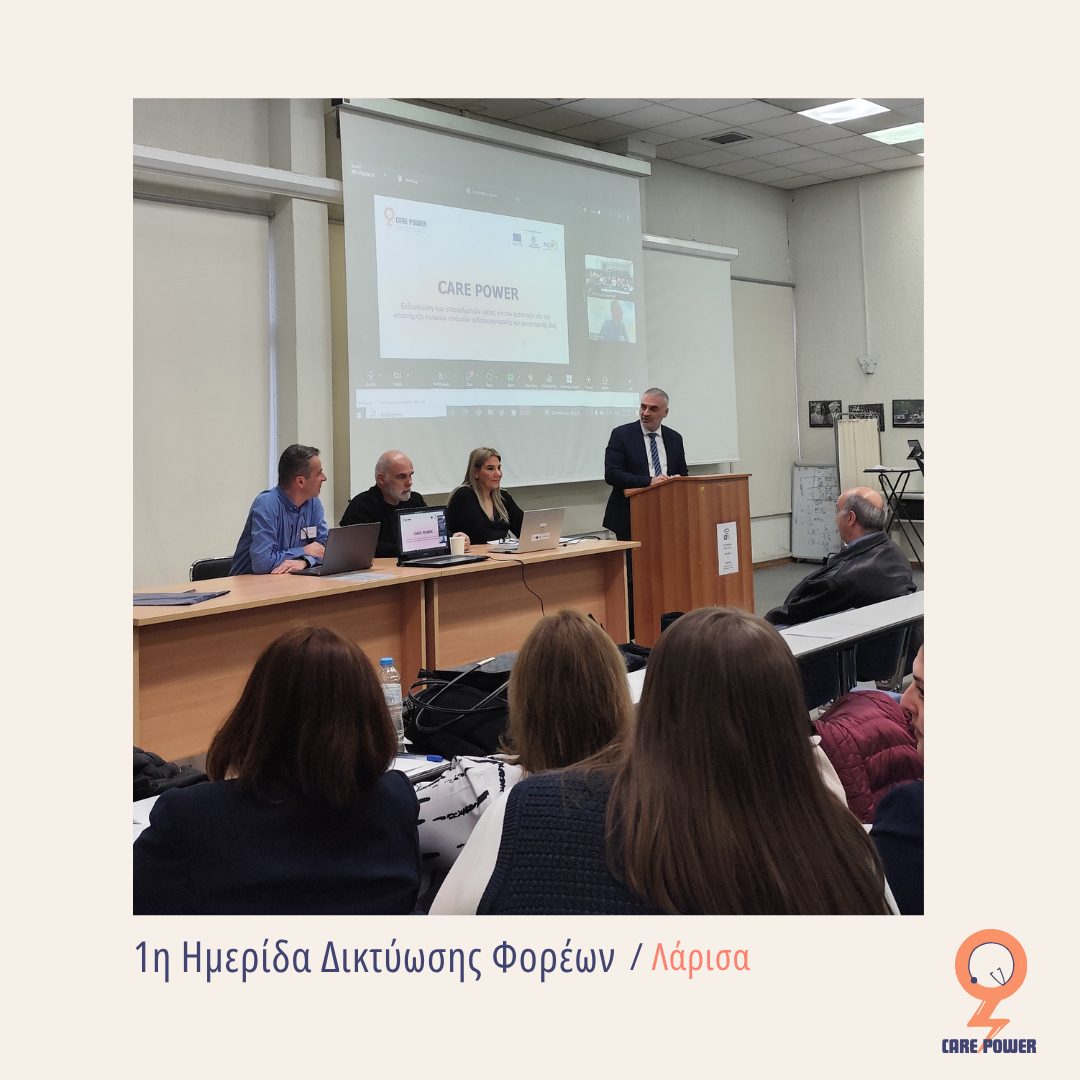
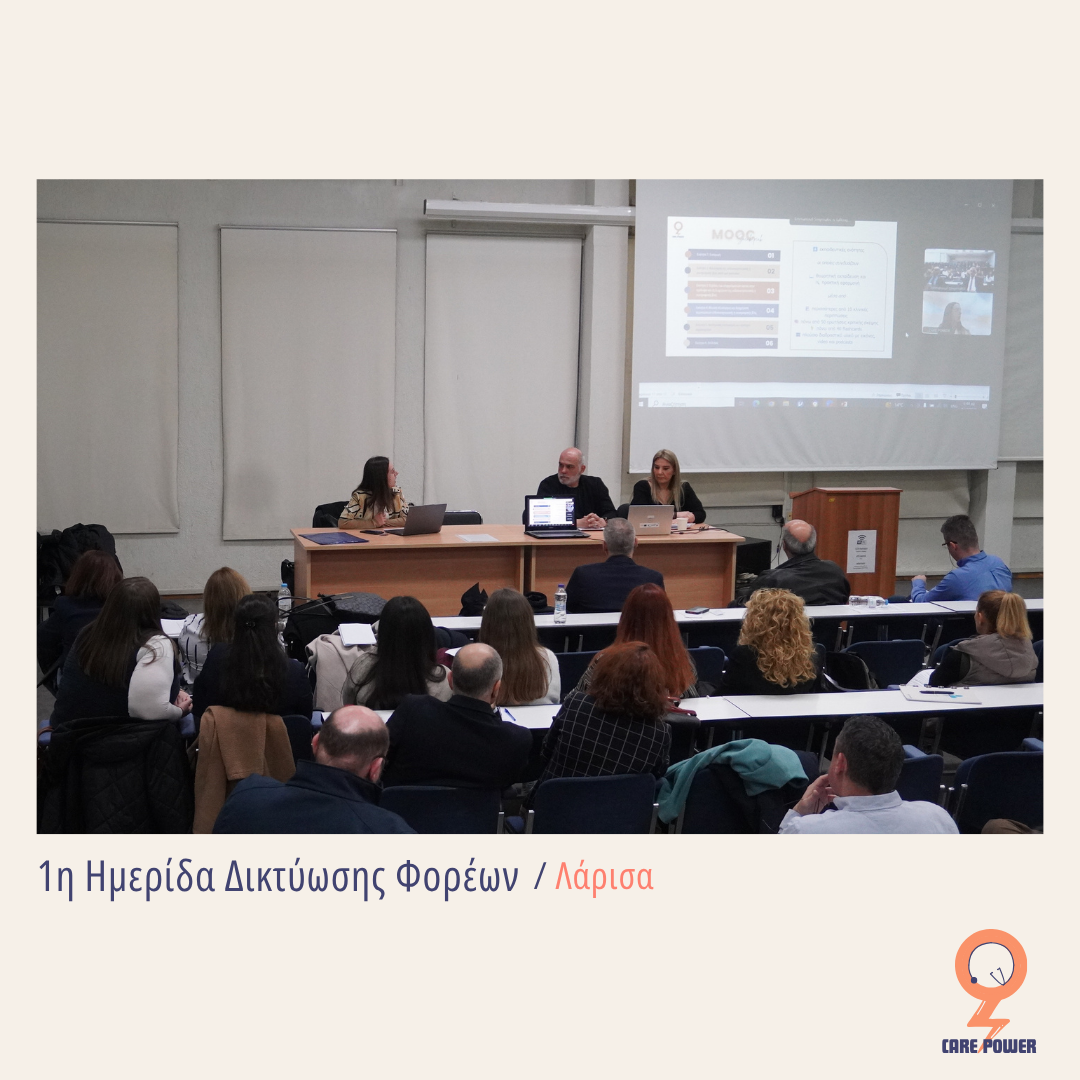
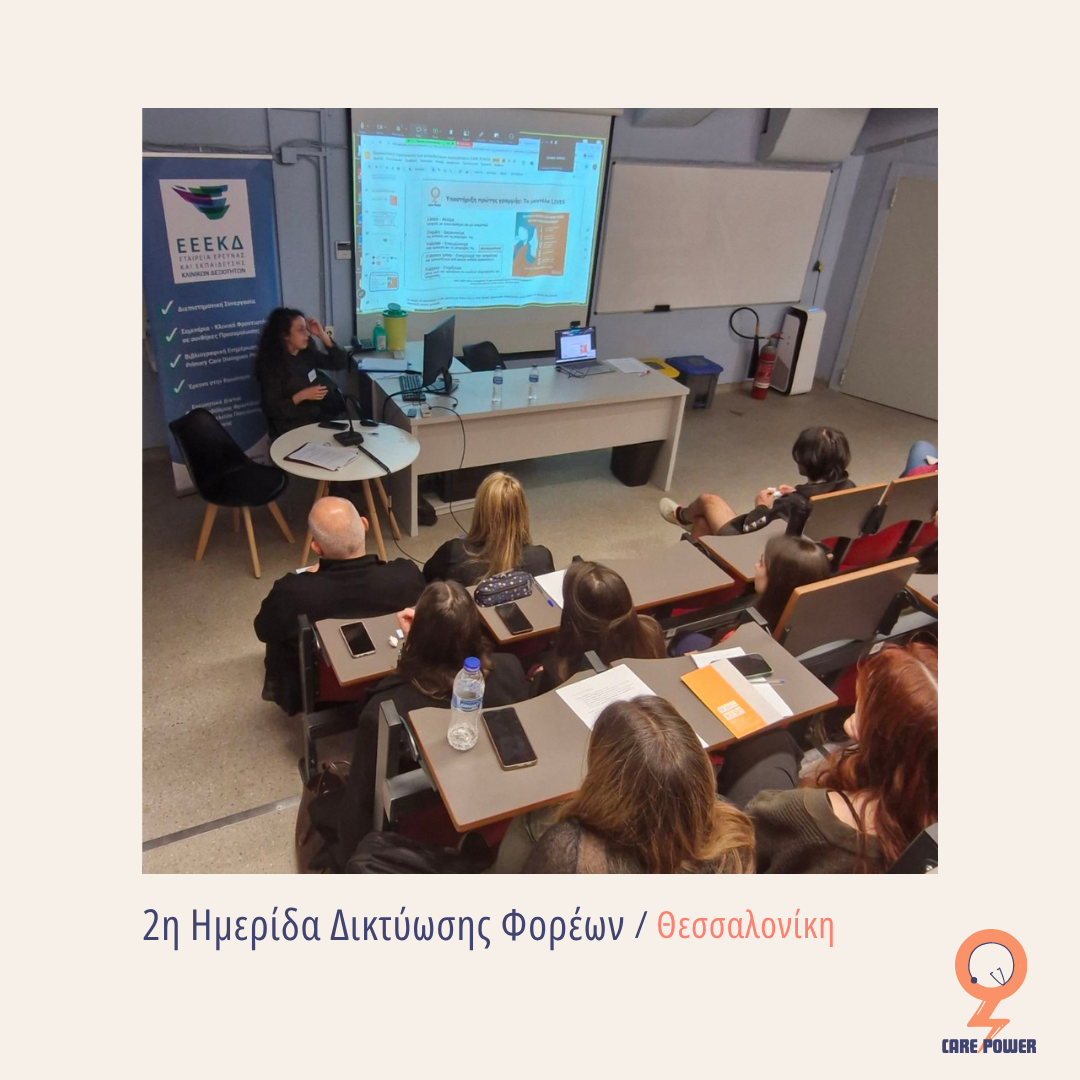
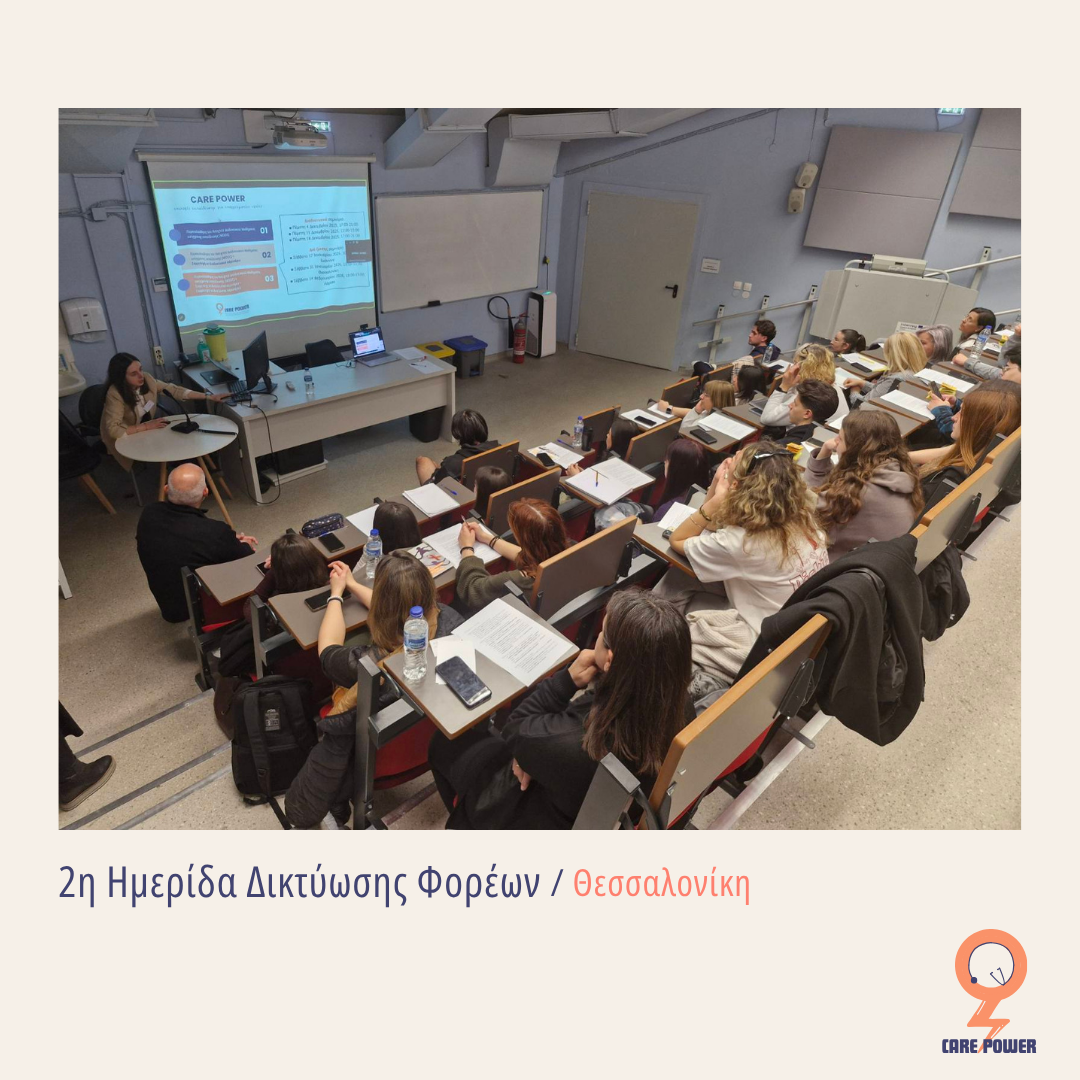
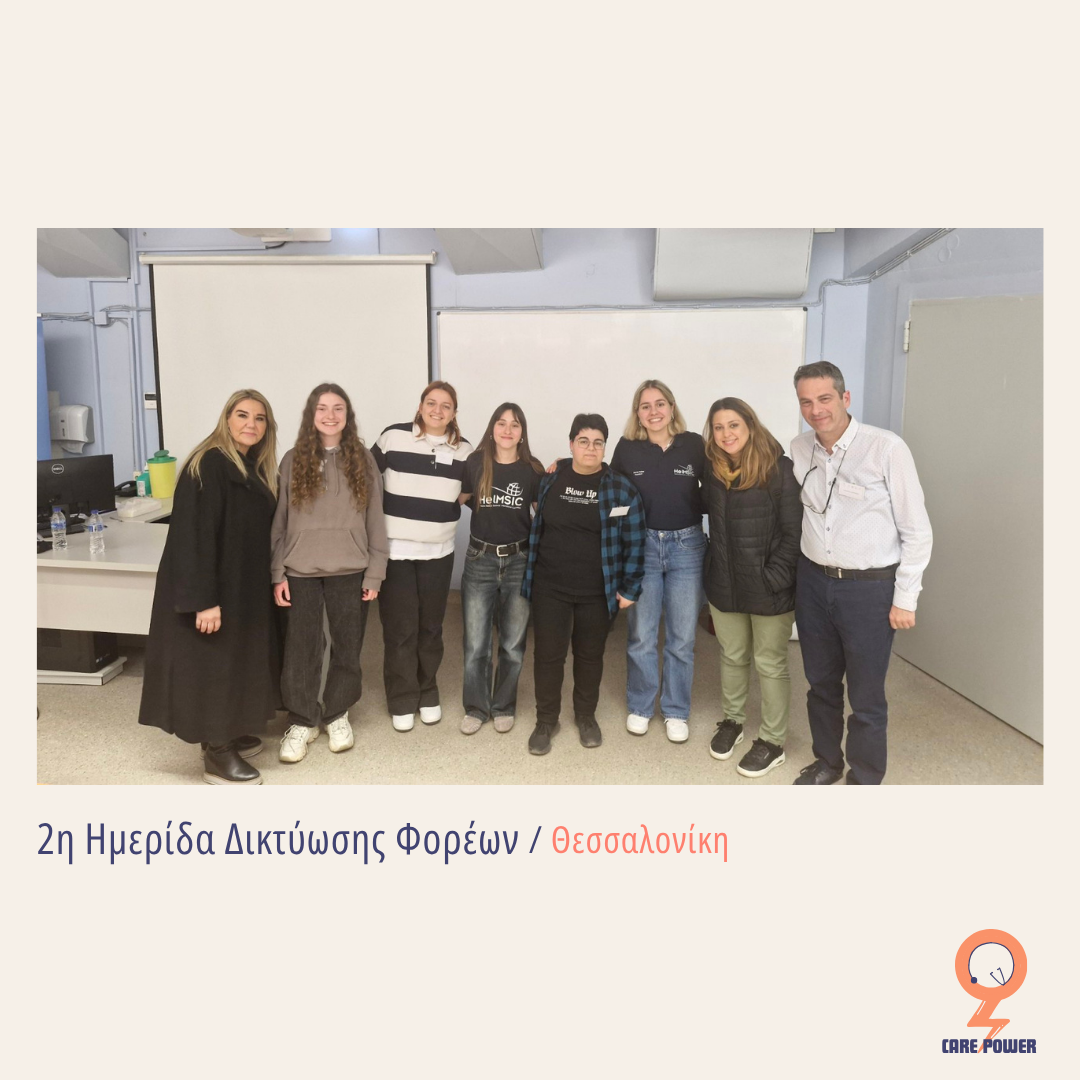
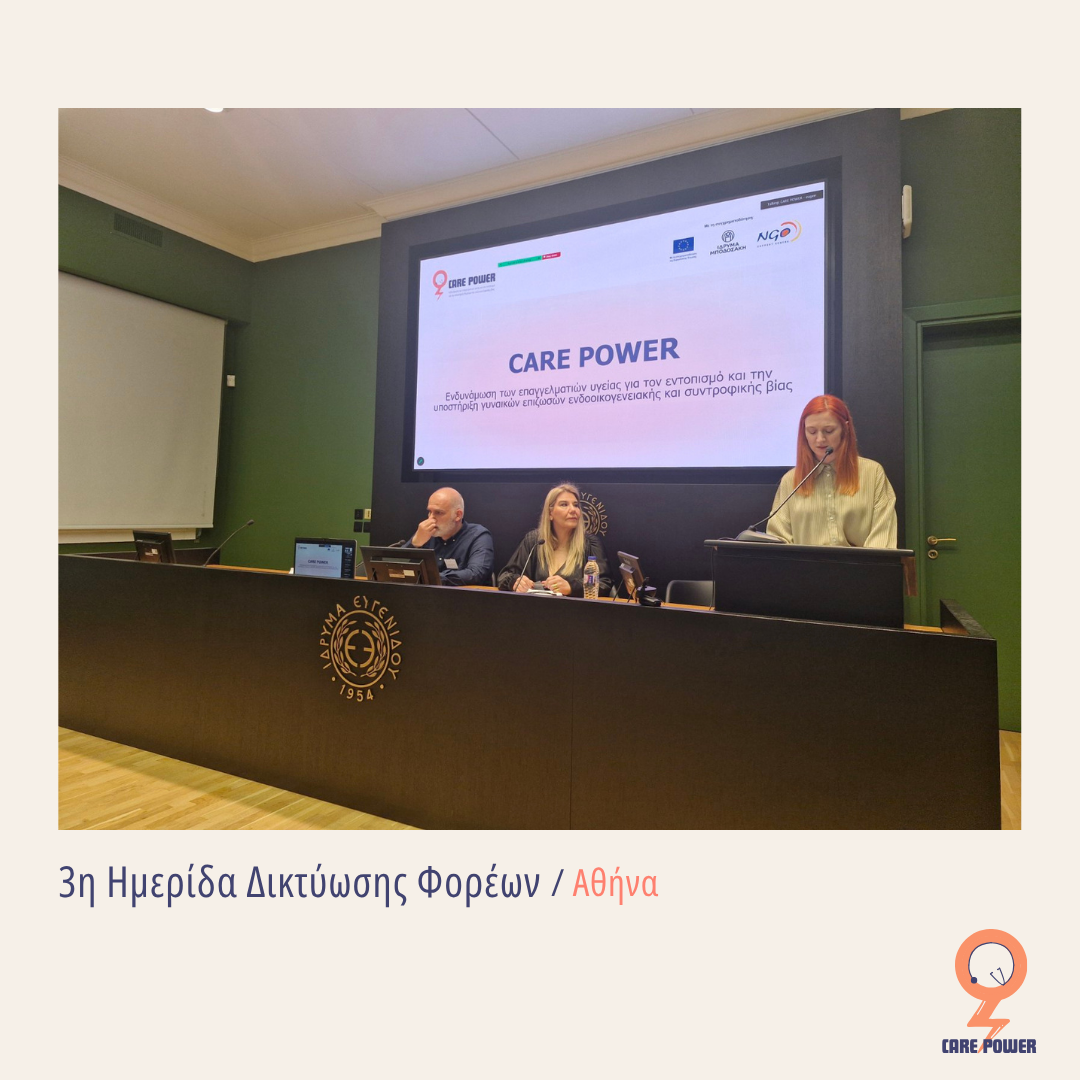
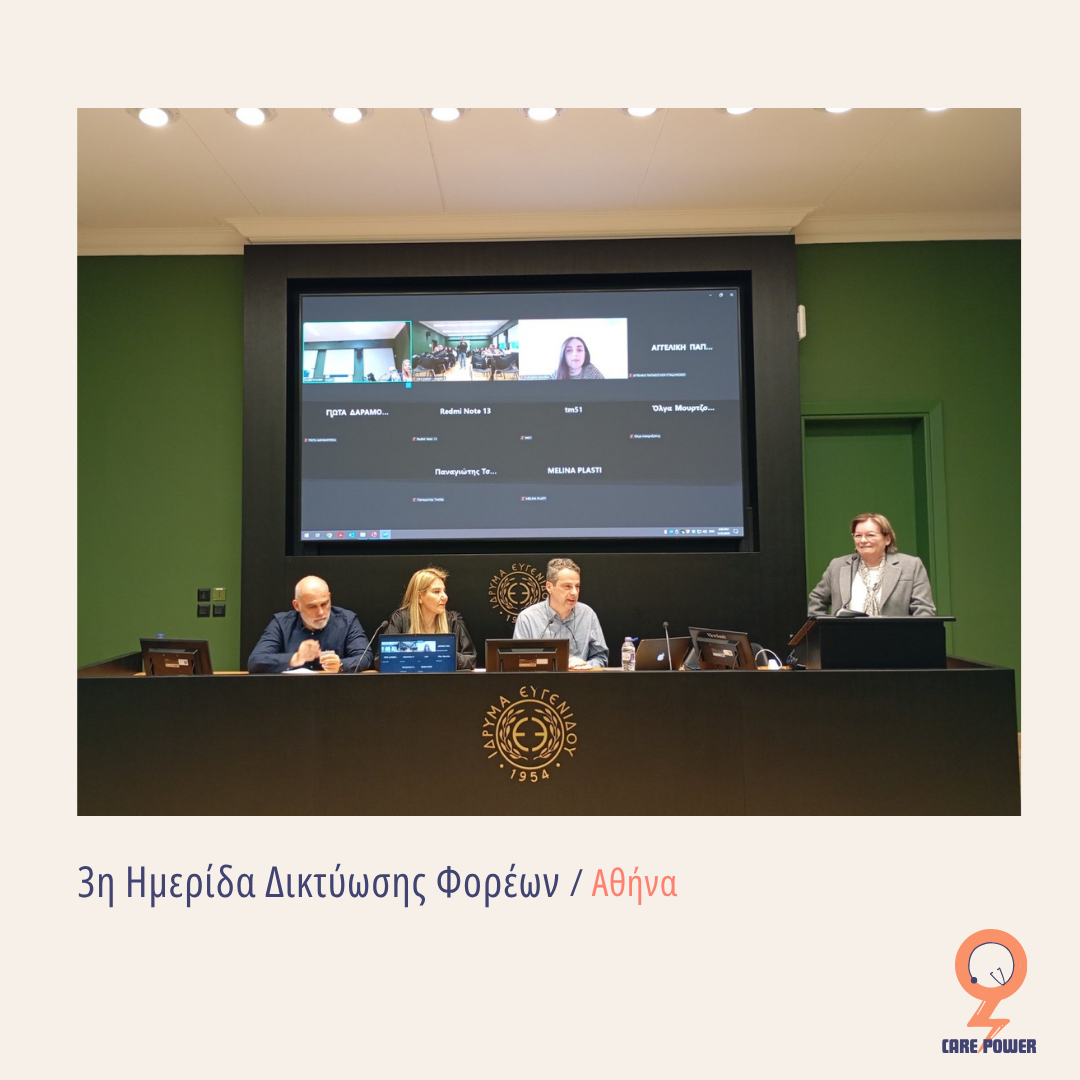
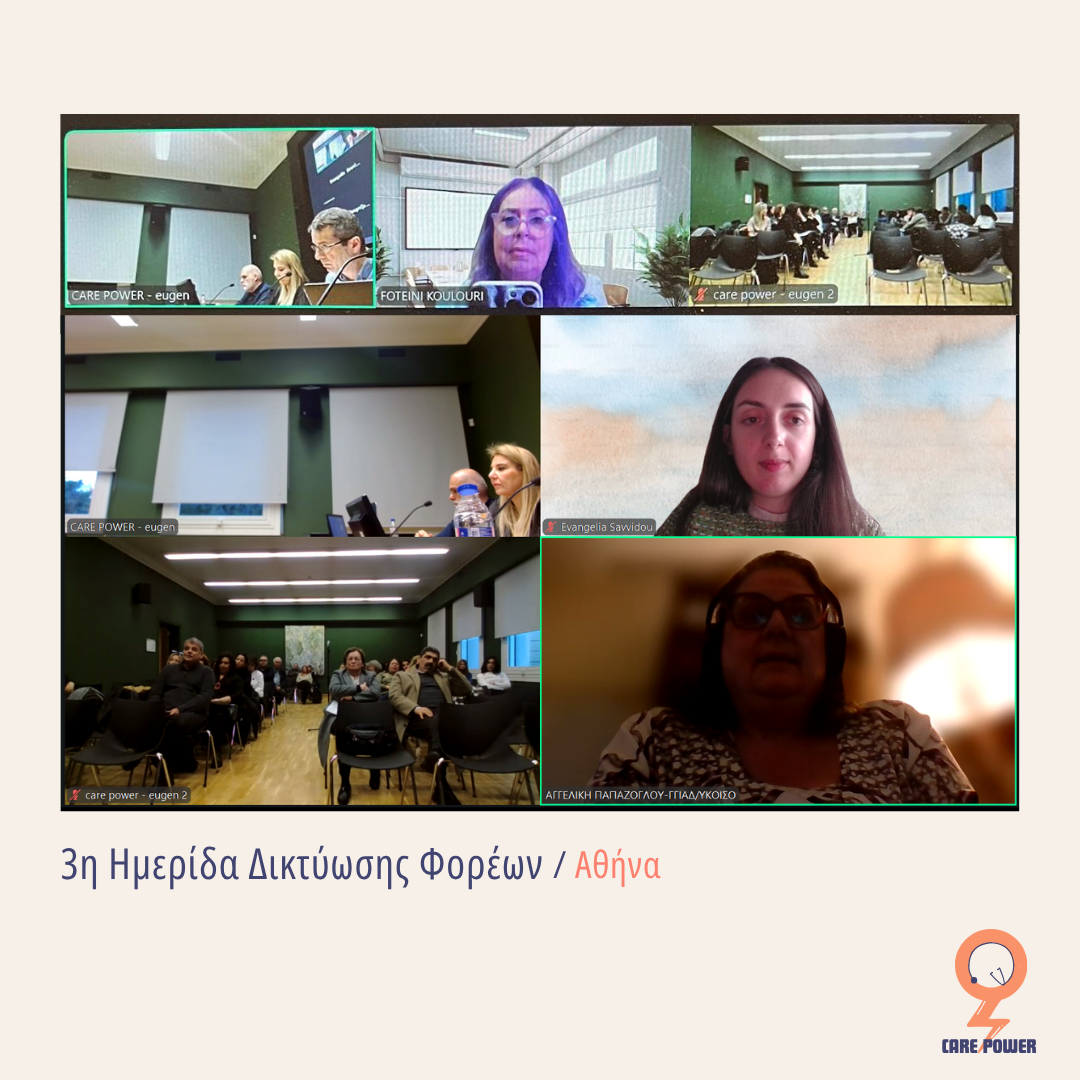
- Stakeholder networking events in Thessaloniki, Athens, and Larissa.
- Production of two educational podcast episodes.
- Production of six short educational videos.
Impact
- Strengthen the knowledge and skills of healthcare professionals in identifying, intervening early, and supporting survivors of gender-based violence.
- Create practical tools and guidelines for detection and intervention.
- Improve collaboration between healthcare professionals, healthcare services, and supporting organizations.
- Increase public awareness of the issue of gender-based violence through the project's outreach activities and results.
- Contribute to the implementation of national and European strategies against gender-based violence.
Massive Open Online Course (MOOC)
The MOOC "CARE POWER: Empowering healthcare professionals to identify and support women survivors of domestic and intimate partner violence" consists of 6 educational modules. These modules combine theoretical training with practical application through 10+ clinical cases for real-world context, 50+ critical thinking questions to enhance clinical judgment, 40+ flashcards for key concept reinforcement, and rich interactive material, including images, videos, and podcasts.
The content is primarily addressed to healthcare professionals working in Primary Healthcare units and Hospital Emergency Departments, as well as students of Health Science faculties.
Available Online | Free of Charge | Registration Required
Podcast - Discussing Domestic and Intimate Partner Violence Against Women
Episode 1
In the 1st episode, we engage in a meaningful discussion regarding the phenomenon and dimensions of gender-based violence—specifically domestic and intimate partner violence against women—focusing on the reality that healthcare professionals are called upon to manage.
Through the discussion with the project’s multidisciplinary team, we analyze:
The discussion features: Emmanouil Smyrnakis, Matina Papagiannopoulou, Magda Gavana, Anna Daskalaki, and Panagiotis Paraskevopoulos. Coordination of the discussion, as well as the organization and technical editing of the episode, was undertaken by Evangelia Savvidou.
Listen the podcast!Through the discussion with the project’s multidisciplinary team, we analyze:
- The CARE POWER project, its objectives, and its core actions.
- The definitions, causes, forms, and extent of domestic and intimate partner violence against women in Greece and internationally.
- The role of Primary Healthcare, particularly in prevention and early detection.
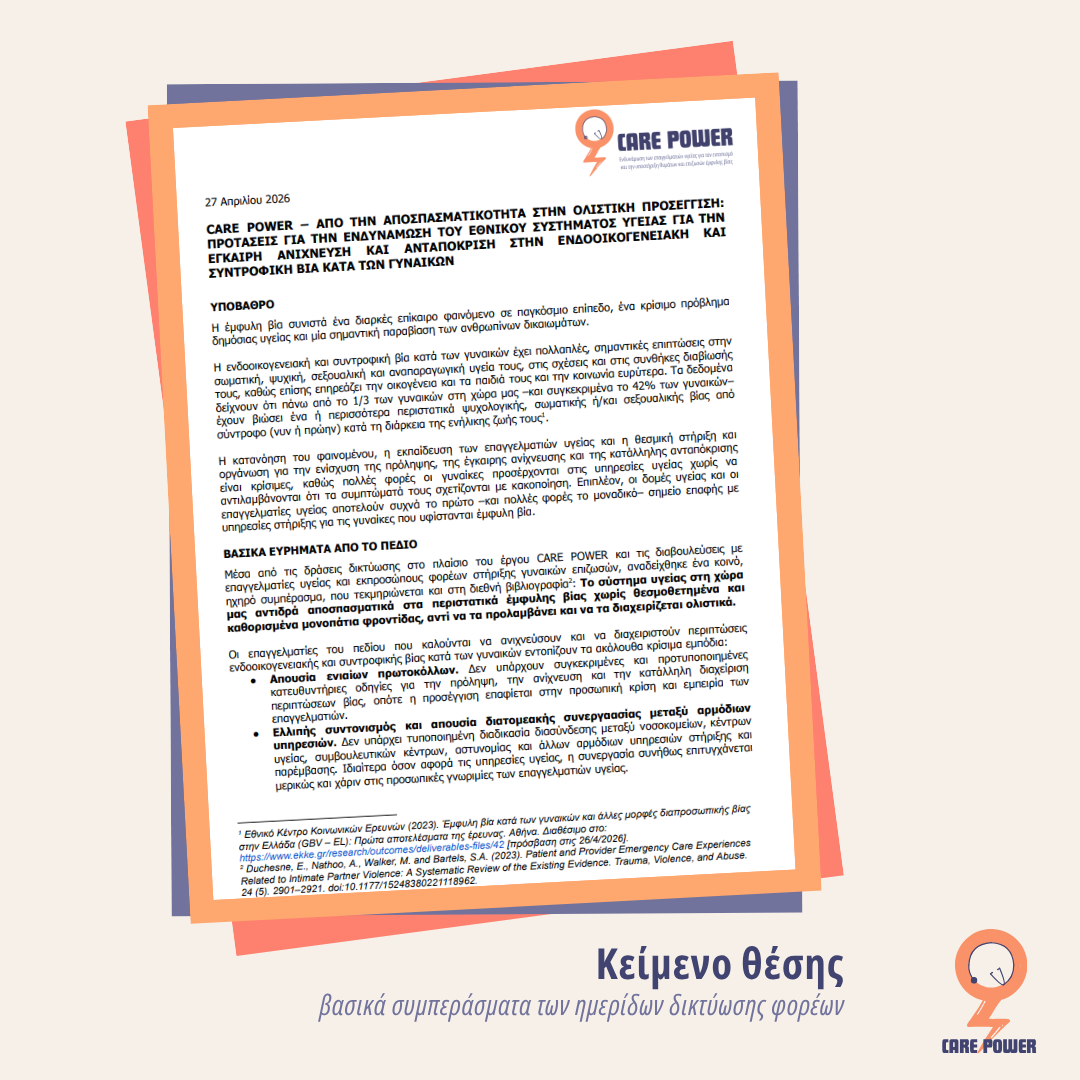
- The institutional gaps and challenges of the National Health System in our country regarding case management, as identified by the literature review conducted within the framework of the project.
- The experiences of healthcare professionals, as recorded in the focus groups conducted during the project, regarding their role, their training needs, and the gender-based bias/questioning faced by female professionals and students themselves.
The discussion features: Emmanouil Smyrnakis, Matina Papagiannopoulou, Magda Gavana, Anna Daskalaki, and Panagiotis Paraskevopoulos. Coordination of the discussion, as well as the organization and technical editing of the episode, was undertaken by Evangelia Savvidou.
Episode 2
In the 2nd episode, we move from theory to practice regarding the detection and management of cases of domestic and intimate partner violence against women. We discuss the tools and protocols that Primary Healthcare professionals need to stand effectively and respectfully by survivors.
Through the discussion with the project’s multidisciplinary team, we analyze:
The discussion features: Emmanouil Smyrnakis, Anna Daskalaki, Panagiotis Paraskevopoulos, Matina Papagiannopoulou, and Evangelia Savvidou. Coordination of the discussion, as well as the organization and technical editing of the episode, was undertaken by Evangelia Savvidou.
Listen the podcast!Through the discussion with the project’s multidisciplinary team, we analyze:
- The indicators of violence, which tools are used, and how trust is built based on the LIVES protocol and trauma-informed care.
- The available support services for survivors in our country and the critical importance of intersectoral collaboration.
- The legal framework and the delicate balance between the obligation to report incidents, ensuring the survivor's safety, and maintaining medical confidentiality.
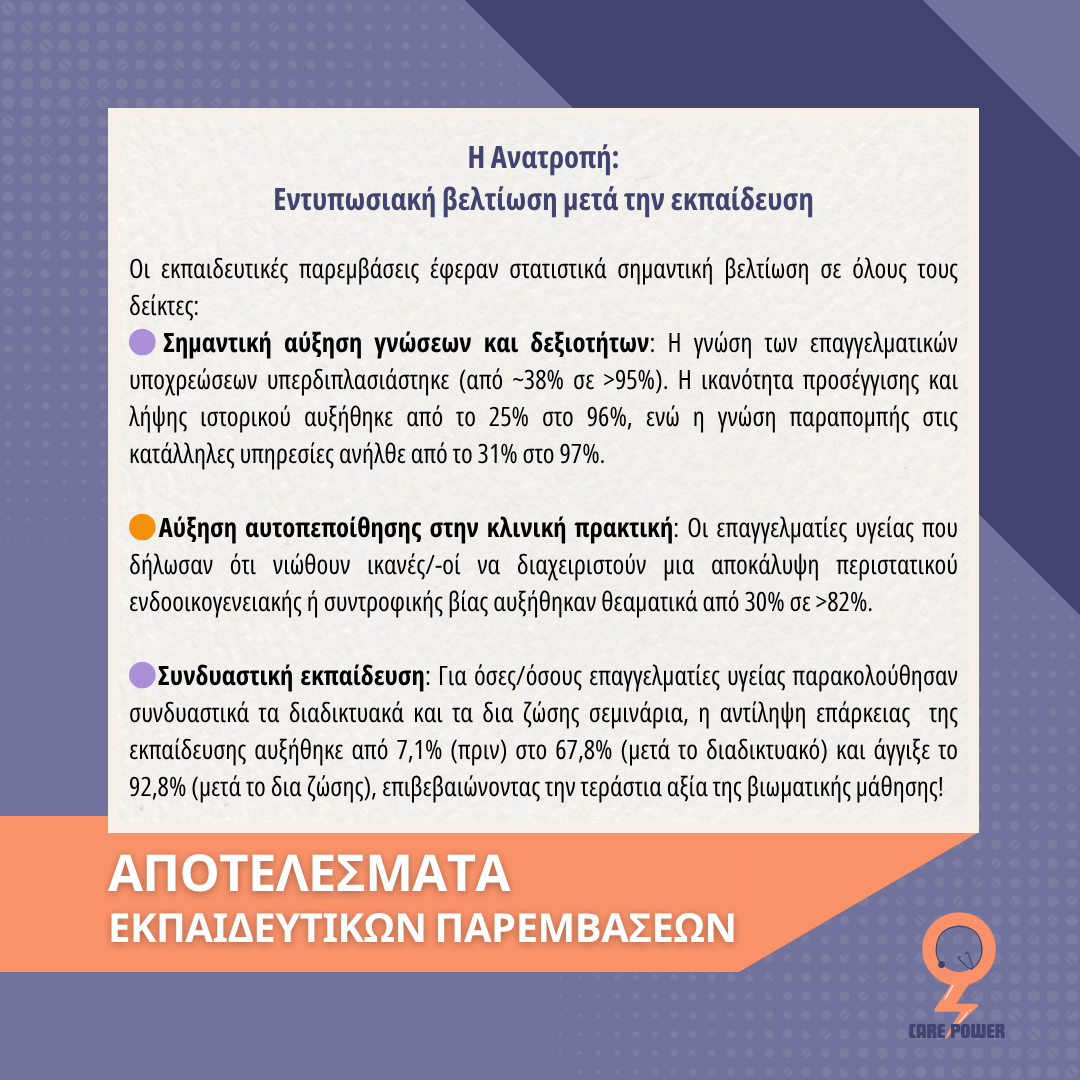
- The educational interventions designed and implemented within the framework of the project, with an emphasis on the presentation of the Massive Open Online Course (MOOC) and their impact on the knowledge, perceptions, and attitudes of healthcare professionals.
The discussion features: Emmanouil Smyrnakis, Anna Daskalaki, Panagiotis Paraskevopoulos, Matina Papagiannopoulou, and Evangelia Savvidou. Coordination of the discussion, as well as the organization and technical editing of the episode, was undertaken by Evangelia Savvidou.
Presentations at Scientific Meetings
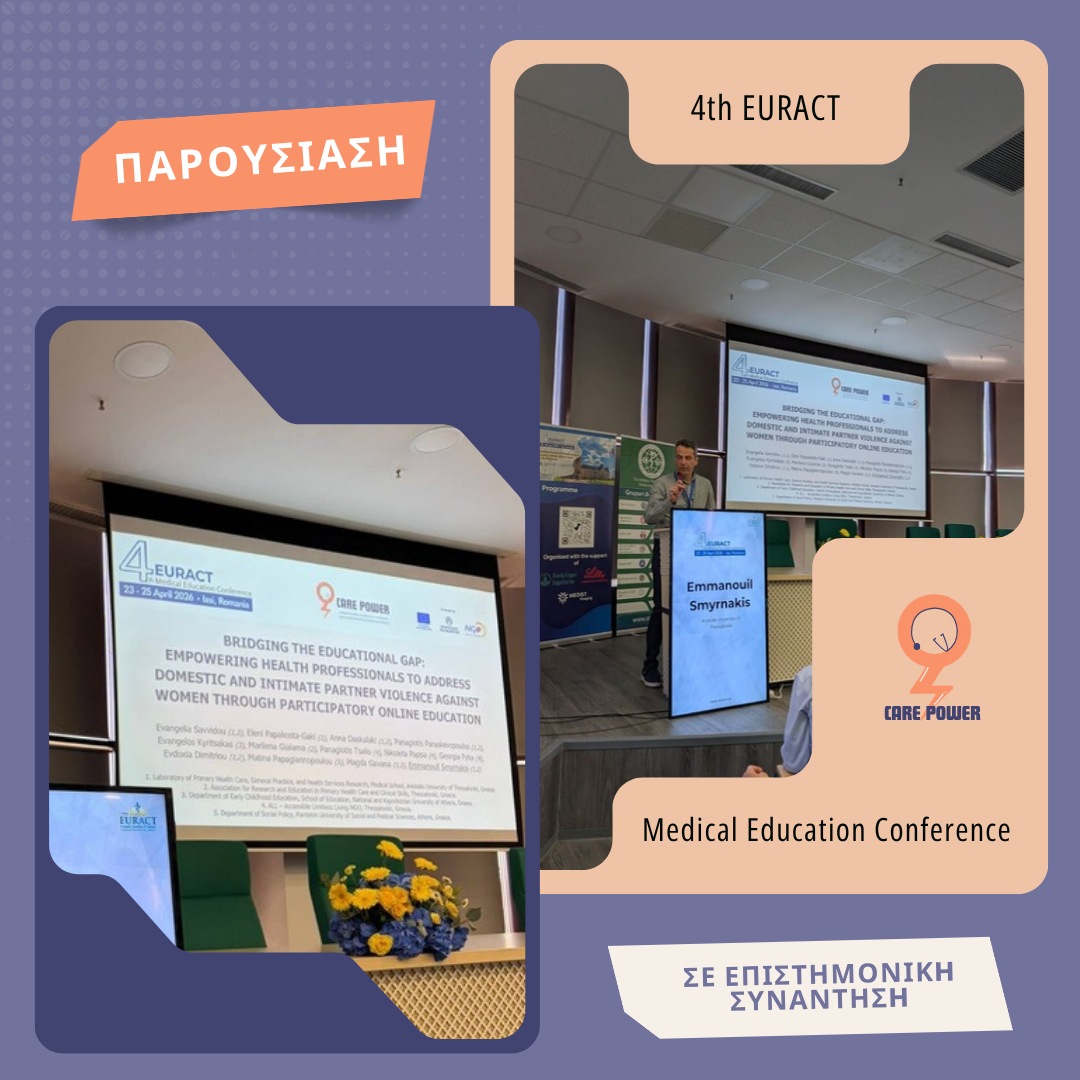
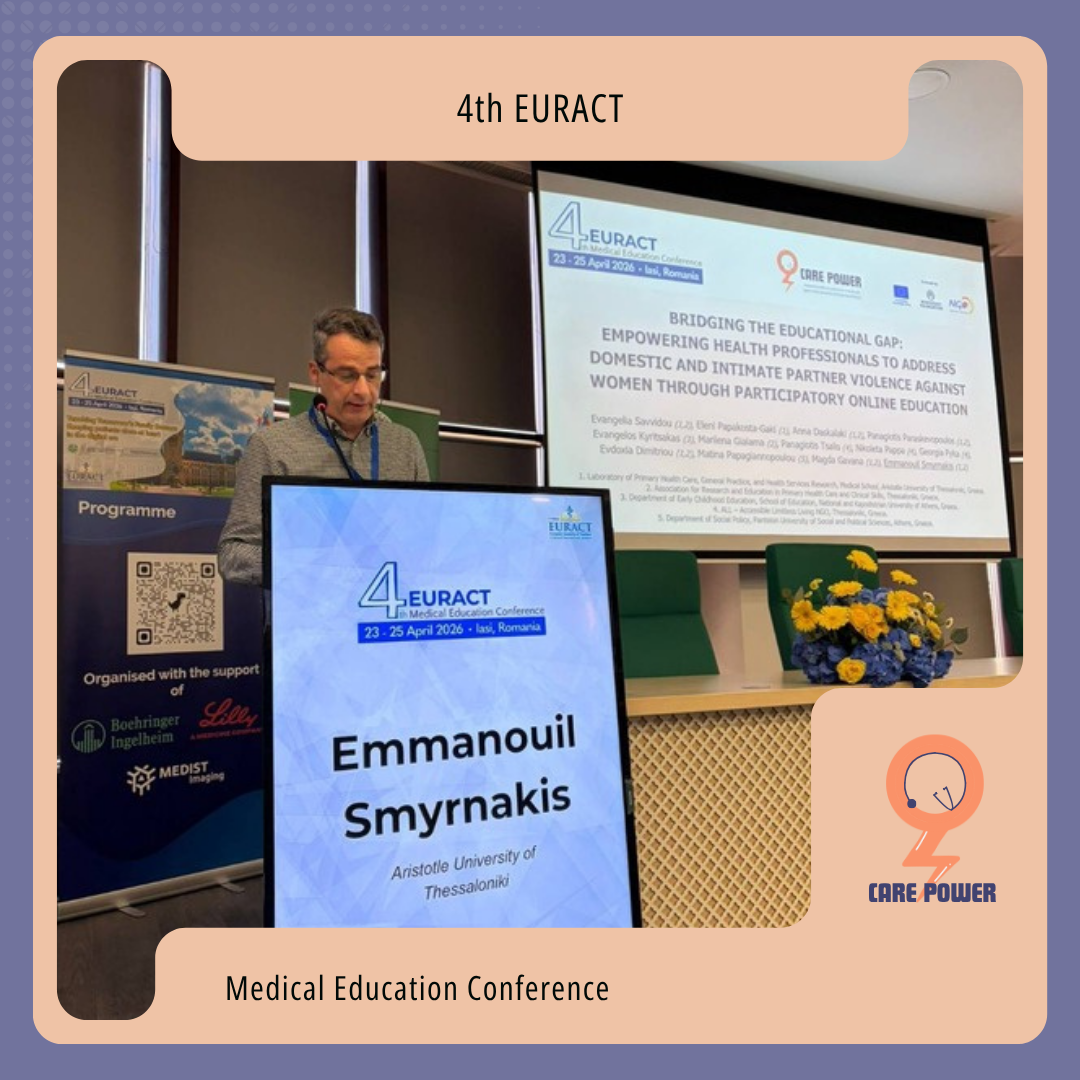
Oral Presentation at the 4th EURACT Medical Education Conference (April 2026)
"Bridging the Educational Gap: Empowering Health Professionals to Address Domestic and Intimate Partner Violence against Women through Participatory Online Education", Evangelia Savvidou, Eleni Papakosta-Gaki, Anna Daskalaki, Panagiotis Paraskevopoulos, Evangelos Kyritsakas, Marilena Gialama, Panagiotis Tsalis, Nikoleta Pappa, Georgia Fyka, Evdoxia Dimitriou, Matina Papagiannopoulou, Magda Gavana, Emmanouil Smyrnakis
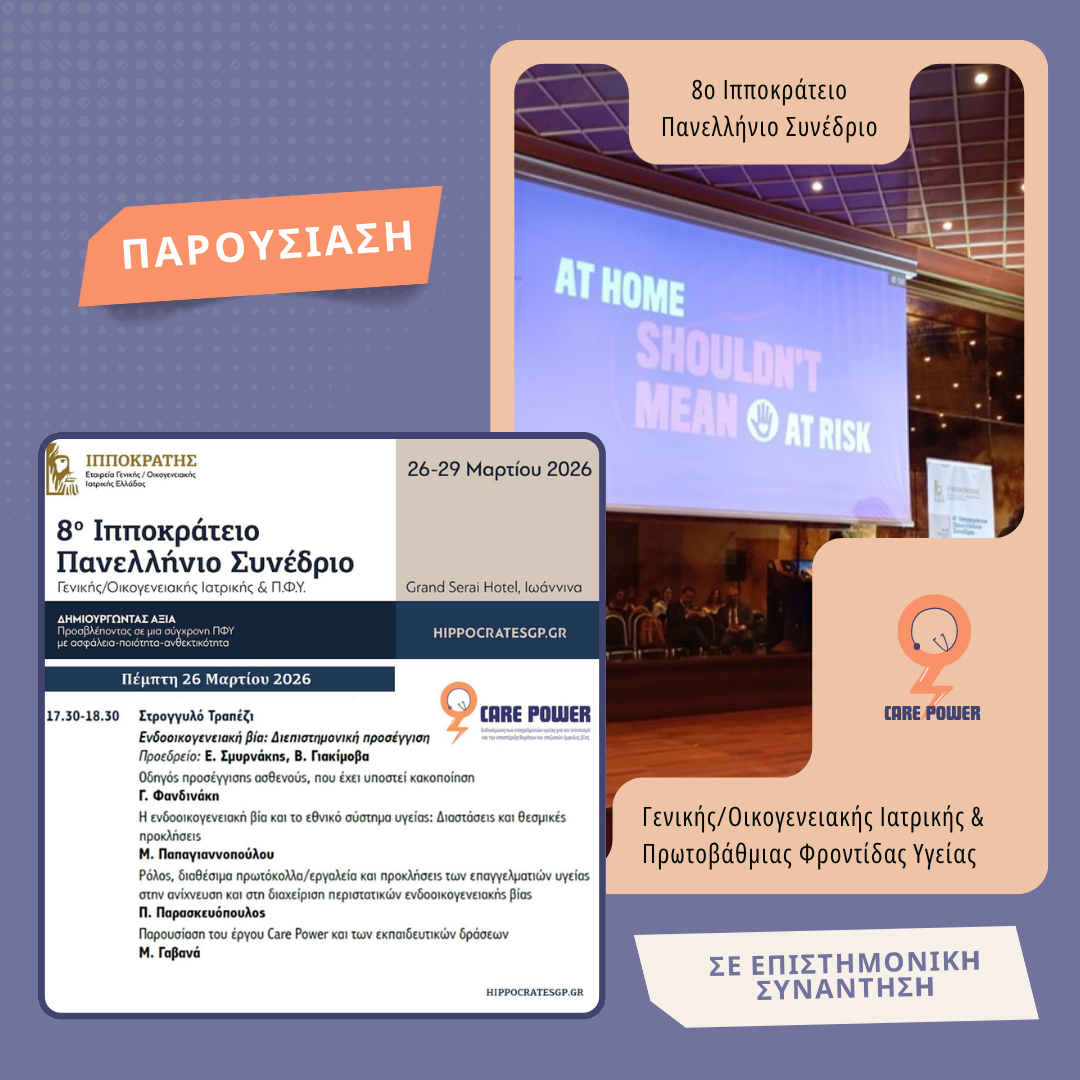
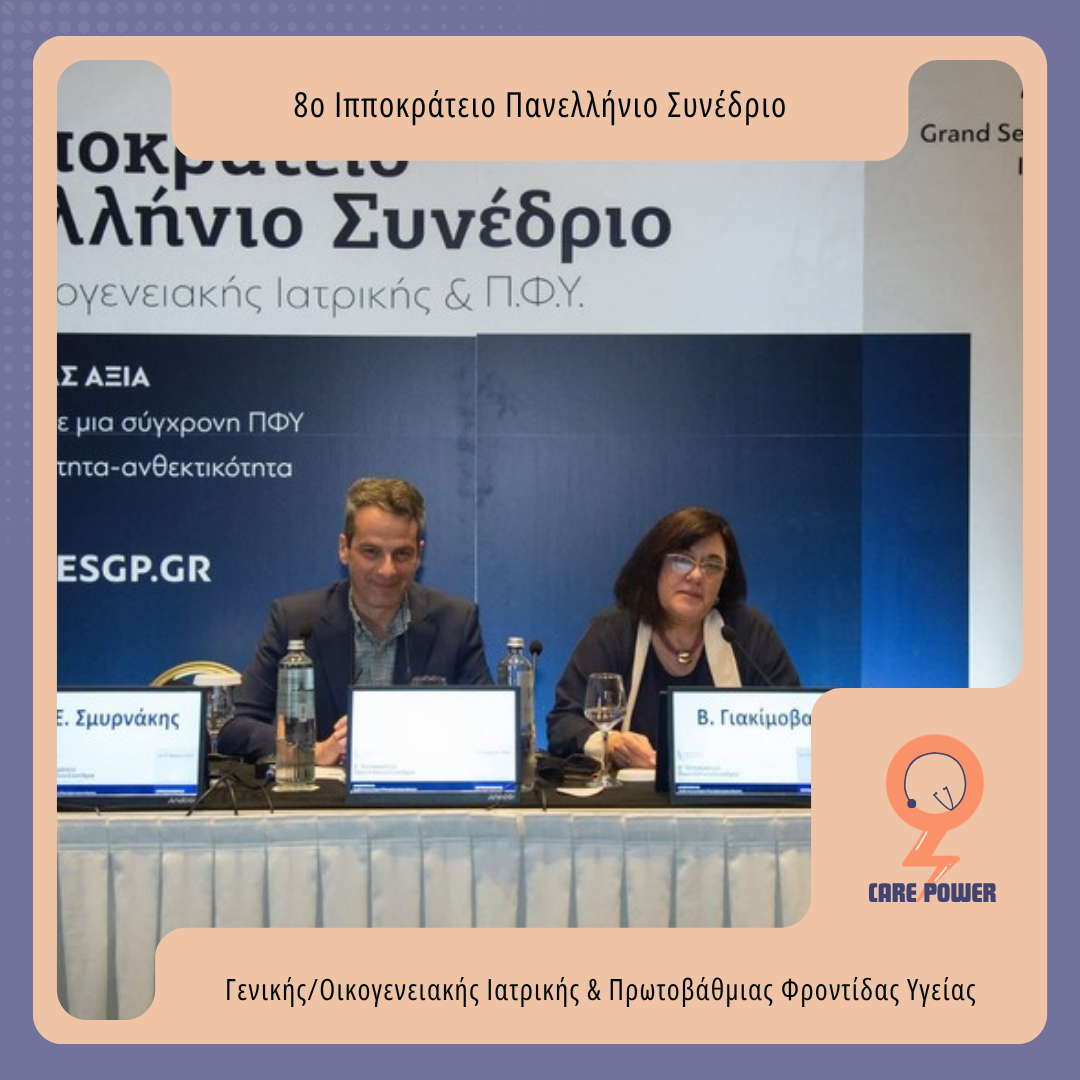
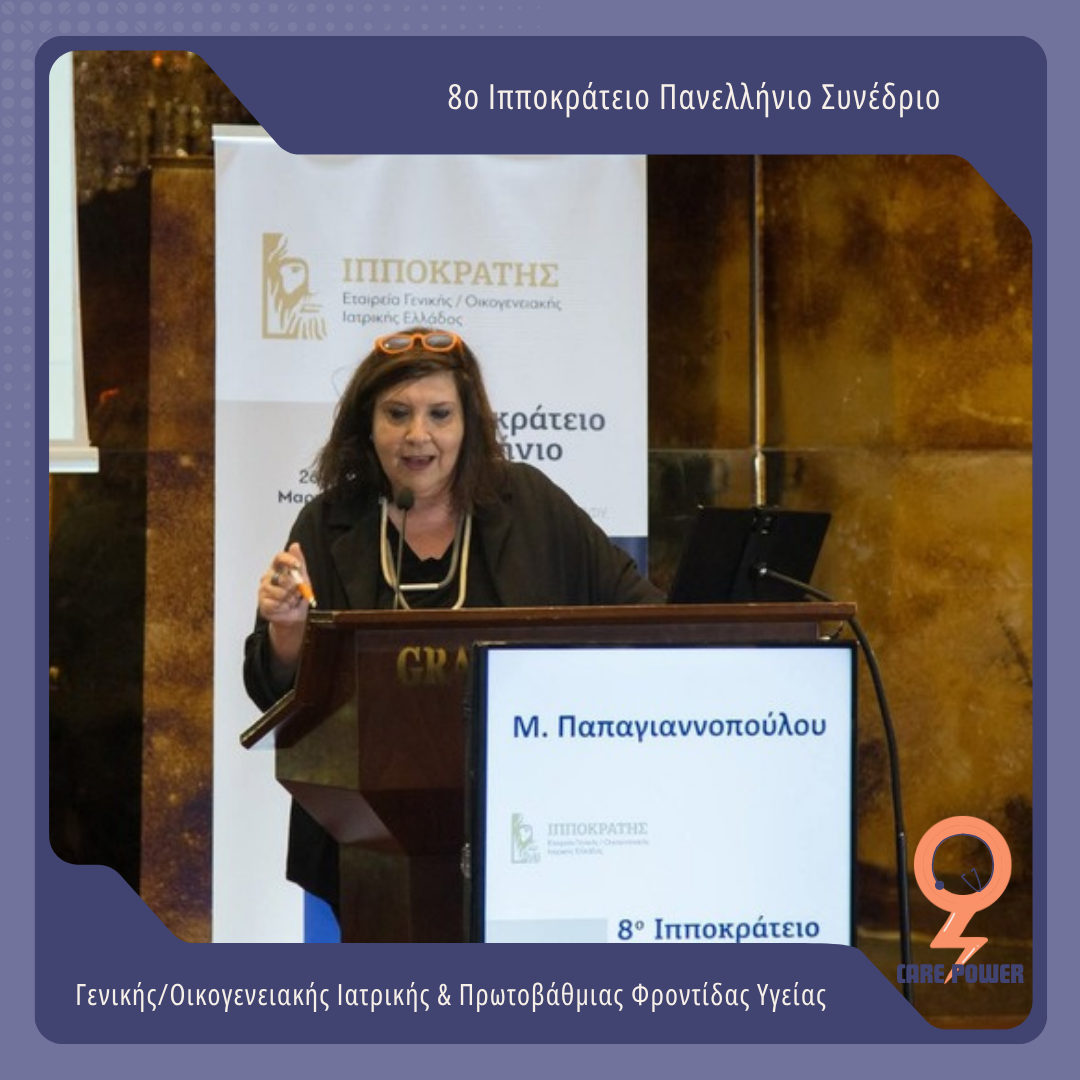
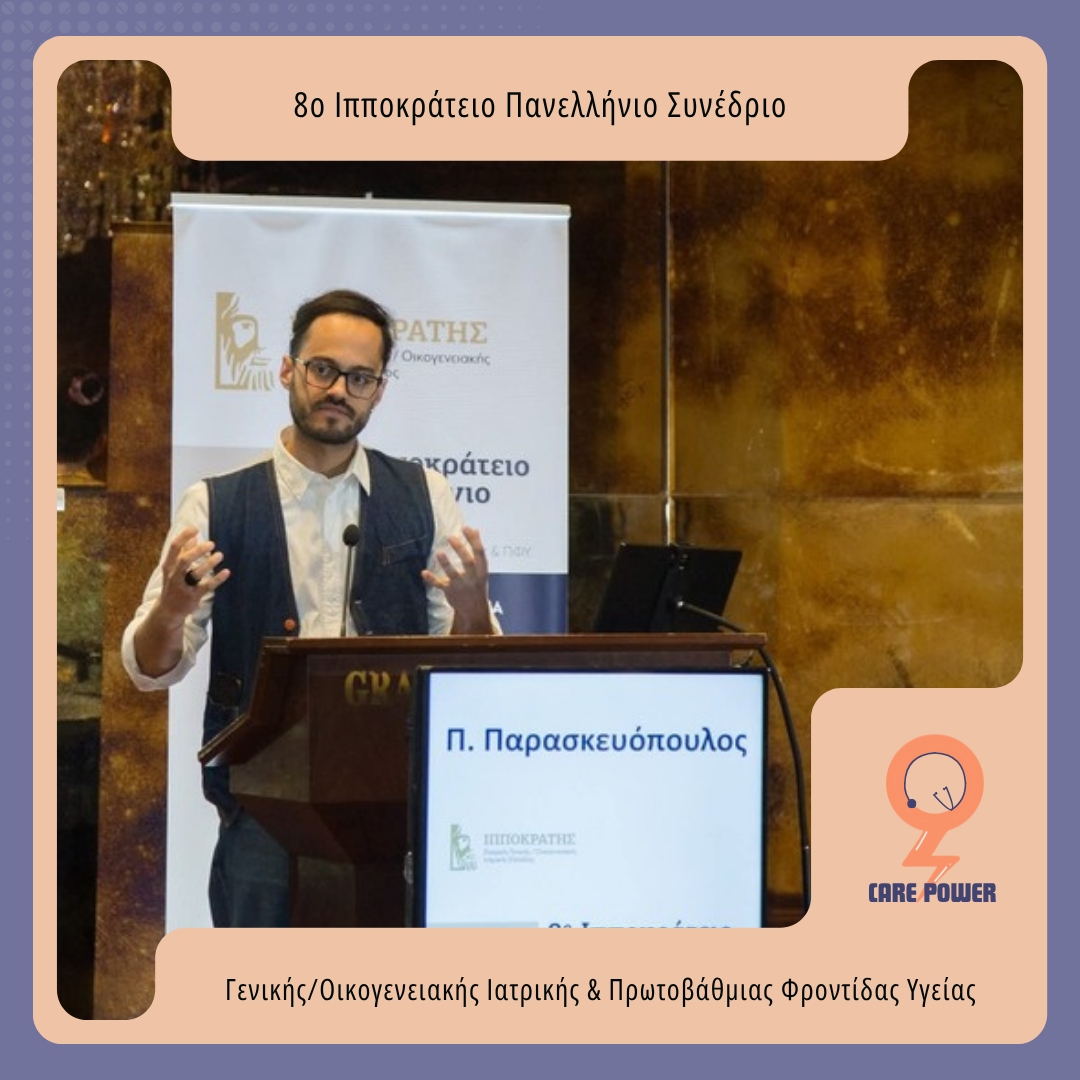
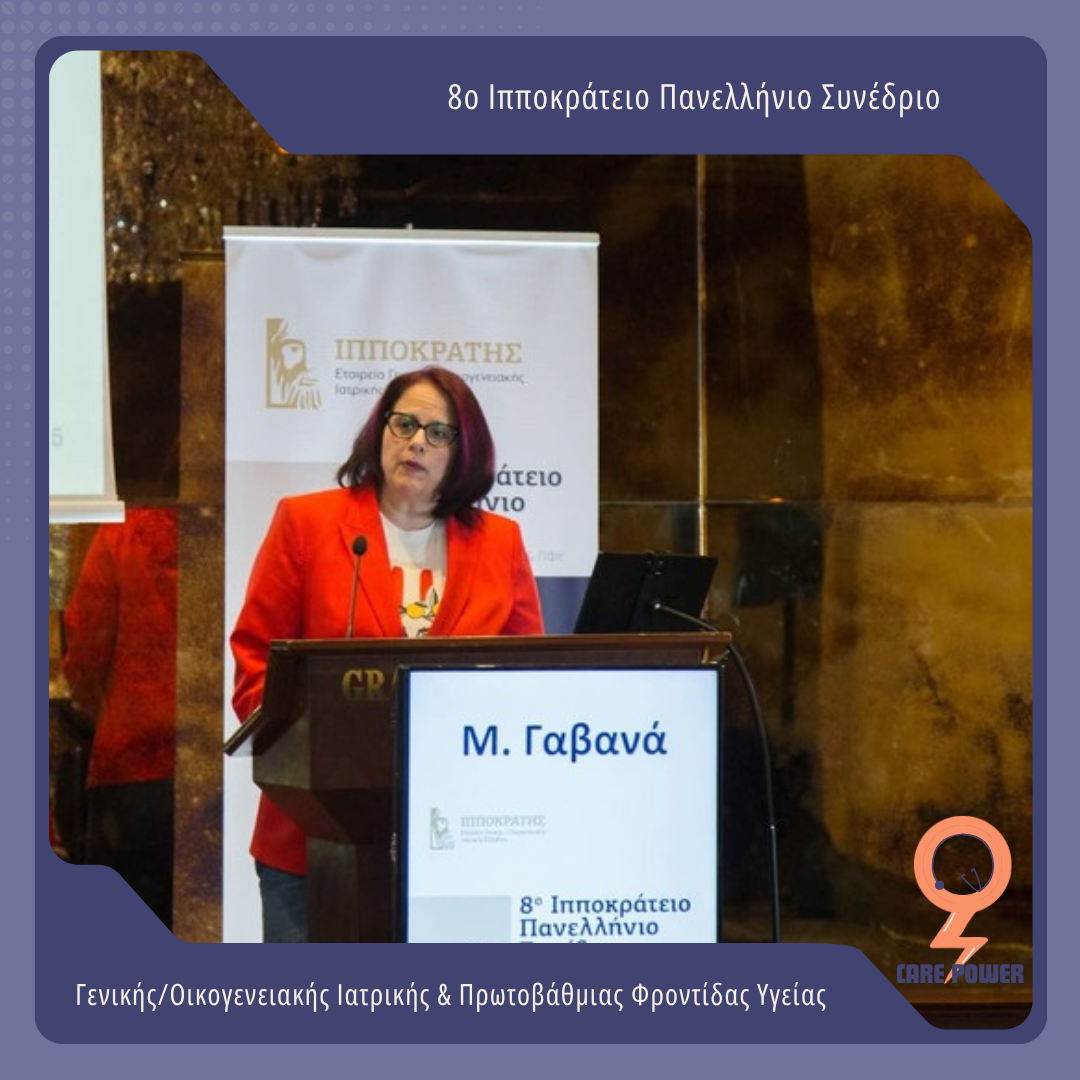
Round Table at the 8th Hippocratic Panhellenic Conference of General/Family Medicine & Primary Health Care (March 2026)
"Domestic Violence: An Interdisciplinary Approach", Matina Papagiannopoulou, Panagiotis Paraskevopoulos, Magda Gavana, Emmanouil Smyrnakis
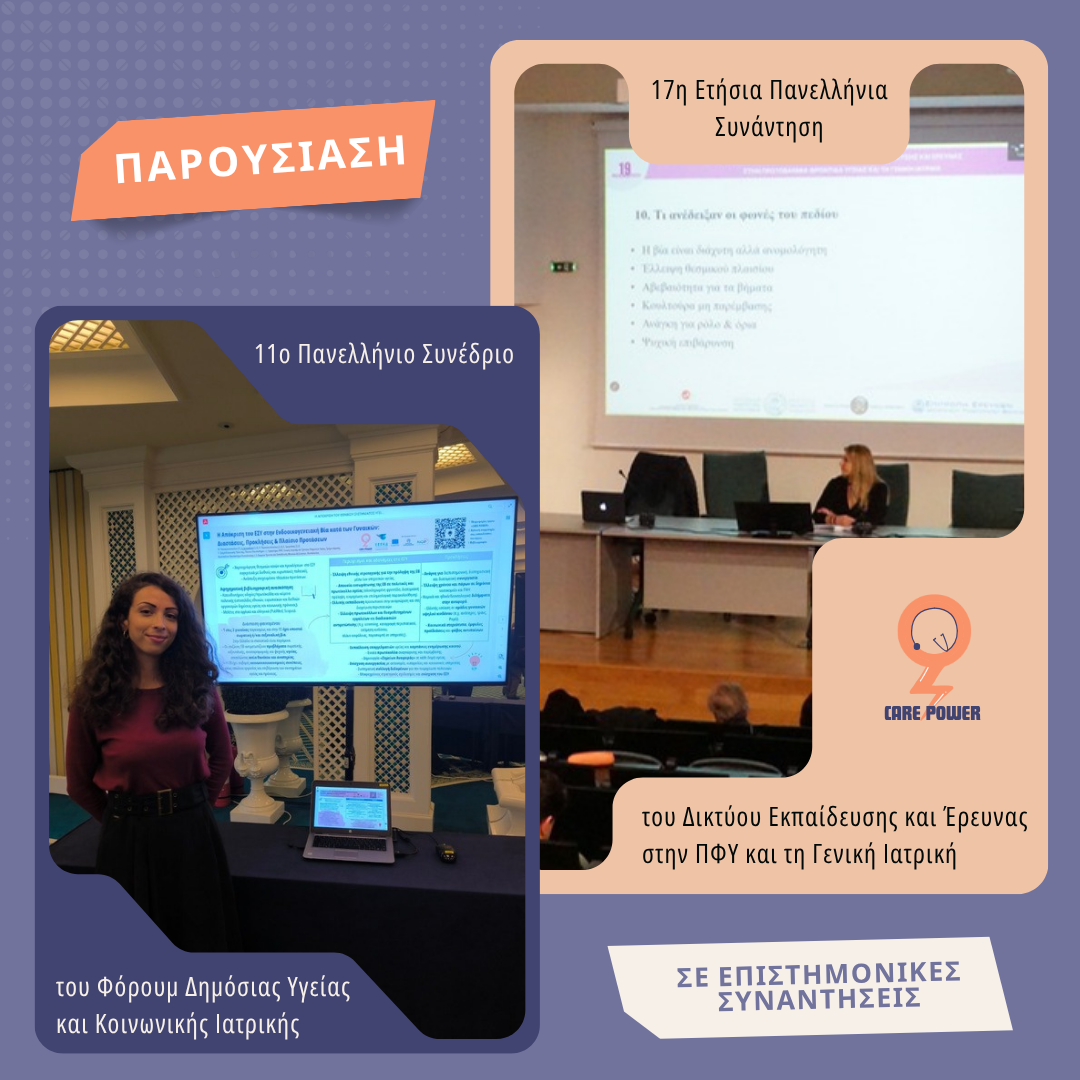
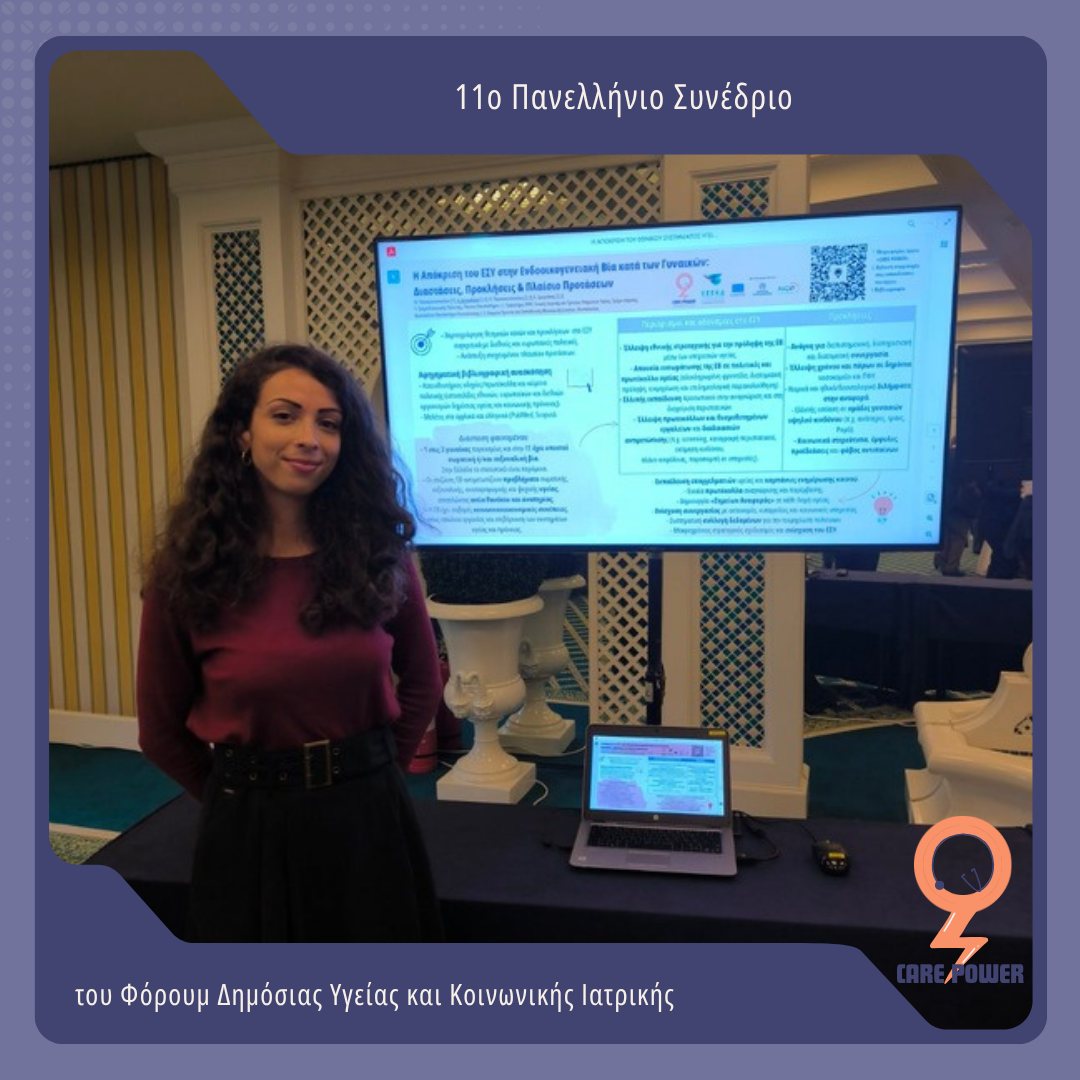
e-Poster Presentation at the 11th Panhellenic Conference of the Public Health and Social Medicine Forum (November 2025)
"The Response of the National Health System to Domestic Violence against Women: Dimensions, Challenges & Framework for Proposals", Matina Papagiannopoulou, Anna Daskalaki, Panagiotis Paraskevopoulos, Emmanouil Smyrnakis
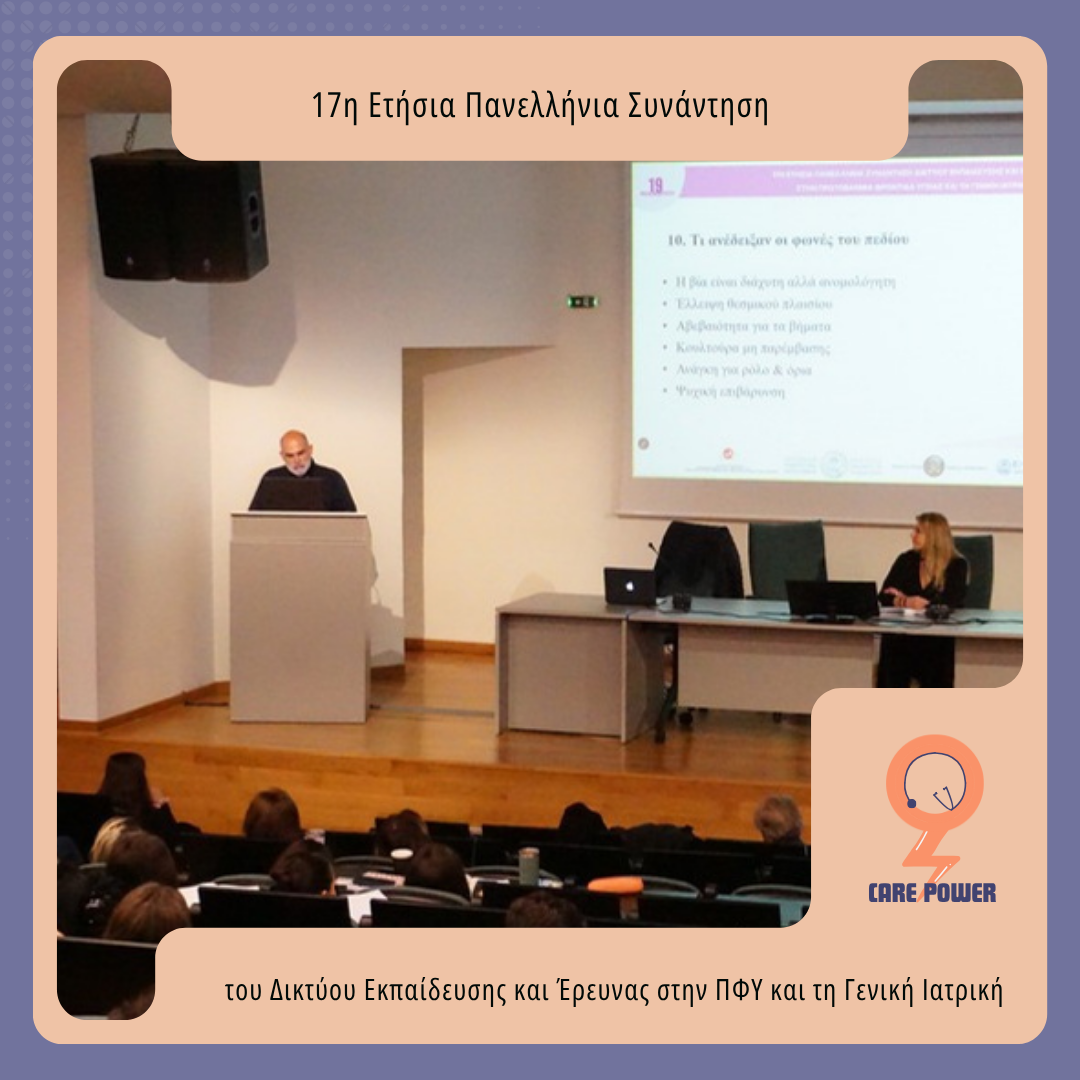
Lecture at the 17th Annual Panhellenic Meeting of the Primary Health Care and General Practice Education and Research Network (November 2025)
"Empowering Health Professionals against Domestic and Intimate Partner Violence against Women", Eleni Papakosta-Gaki, Evangelos Kyritsakas, Emmanouil Smyrnakis
"Bridging the Educational Gap: Empowering Health Professionals to Address Domestic and Intimate Partner Violence against Women through Participatory Online Education", Evangelia Savvidou, Eleni Papakosta-Gaki, Anna Daskalaki, Panagiotis Paraskevopoulos, Evangelos Kyritsakas, Marilena Gialama, Panagiotis Tsalis, Nikoleta Pappa, Georgia Fyka, Evdoxia Dimitriou, Matina Papagiannopoulou, Magda Gavana, Emmanouil Smyrnakis
Round Table at the 8th Hippocratic Panhellenic Conference of General/Family Medicine & Primary Health Care (March 2026)
"Domestic Violence: An Interdisciplinary Approach", Matina Papagiannopoulou, Panagiotis Paraskevopoulos, Magda Gavana, Emmanouil Smyrnakis
e-Poster Presentation at the 11th Panhellenic Conference of the Public Health and Social Medicine Forum (November 2025)
"The Response of the National Health System to Domestic Violence against Women: Dimensions, Challenges & Framework for Proposals", Matina Papagiannopoulou, Anna Daskalaki, Panagiotis Paraskevopoulos, Emmanouil Smyrnakis
Lecture at the 17th Annual Panhellenic Meeting of the Primary Health Care and General Practice Education and Research Network (November 2025)
"Empowering Health Professionals against Domestic and Intimate Partner Violence against Women", Eleni Papakosta-Gaki, Evangelos Kyritsakas, Emmanouil Smyrnakis
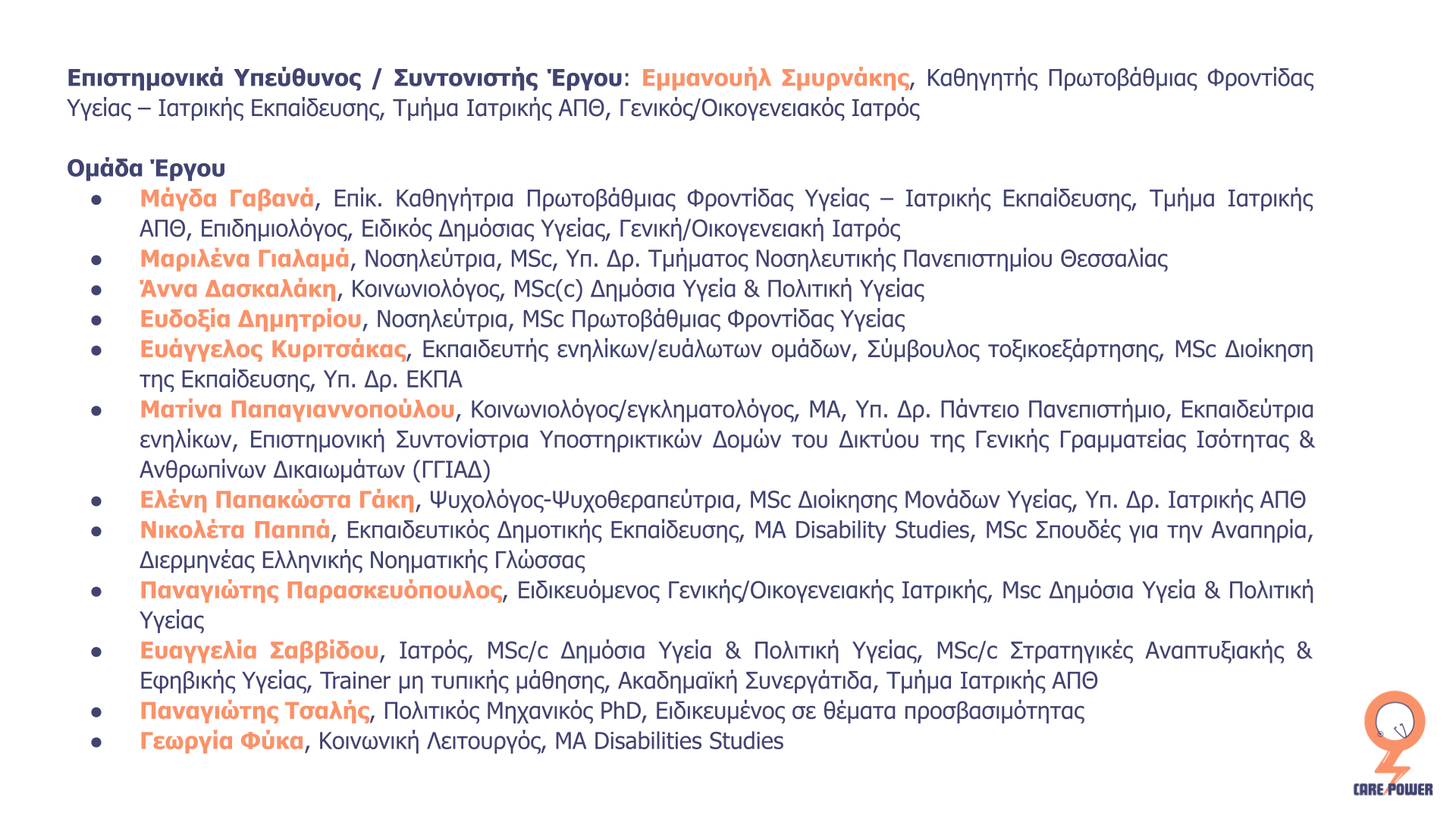
The CARE POWER Project Team
» Thessaloniki – Larissa – Ioannina – Athens
» April 2025 – April 2026
» April 2025 – April 2026
Funded by the European Union. Views and opinions expressed are, however, those of the author(s) only and do not necessarily reflect those of the European Union, the European Commission, the Bodossaki Foundation, or the NGO Support Centre. Neither the European Union nor the European Commission or the Bodossaki Foundation or the NGO Support Centre can be held responsible for them.
The CARE-POWER project is being implemented under the PREVENT program, with the implementing body being the Association for Research and Education in Clinical Skills. The program "Preventing gender-based violence and violence against children" (PREVENT) aims to prevent and combat gender-based violence and violence against children by supporting civil society organizations (CSOs) in Greece and Cyprus that are active in these fields, as well as by strengthening their knowledge, capabilities, and sustainability. PREVENT is co-funded by the European Union through the Citizens, Equality, Rights and Values (CERV) program, the Bodossaki Foundation, and the NGO Support Centre, with a total grant amount of €2.3 million. The PREVENT program is coordinated by the Bodossaki Foundation (Greece), in partnership with the NGO Support Centre (Cyprus).
